dream 013 - isaac dakin on image making, the monarchy and myths
Recently, I picked up a book called ‘The Sense and Nonsense of Prophecy’. It had no blurb, just a black material cover slightly frayed; discoloured a mouldy yellow in one corner, with a black embossed drawing of the devil on the front. His tongue sticking out, taunting me, I bought it.
The book, as I began to read, was an exposé on occult practices written in the 1950s, like a spooky equivalent of an Eve Babitz book. Soothsayers were delivered and exposed like a sacrificial lamb. Most of the frauds who had pretended to hold powers for their own profit often confessed, but it was their belief they were providing a public service. The Italian medium, Eusapia Palladino, answered when confronted, “This public demands it and must have a show.” Fraud has always been about deception, but séance rooms existed in the space between belief and disbelief, creating a business model built on ambiguity.
A week before I found this book, I called Isaac Dakin, a student and image director I’d recently collaborated on a project with. Posted up at his Mum’s in Manchester, we got talking about daydreaming as a form of manifestation, leading us to his unexpected love for the Royal family. Even though he confessed to their lifestyles being so deeply out of touch, I wondered, if the old symbols of success no longer feel convincing, what takes their place? “The power of change lies with the individual” he tells me, directly reflected in his images which feel contemporary, and separate to the reference-baiting being churned out by the machines.
Maybe that's the strange double consciousness of modern aspiration, recognising the illusion while continuing to base our desires around it. In that sense, every dream of a different life risks becoming a self-fulfilling prophecy. We can know the trick and still need the show.
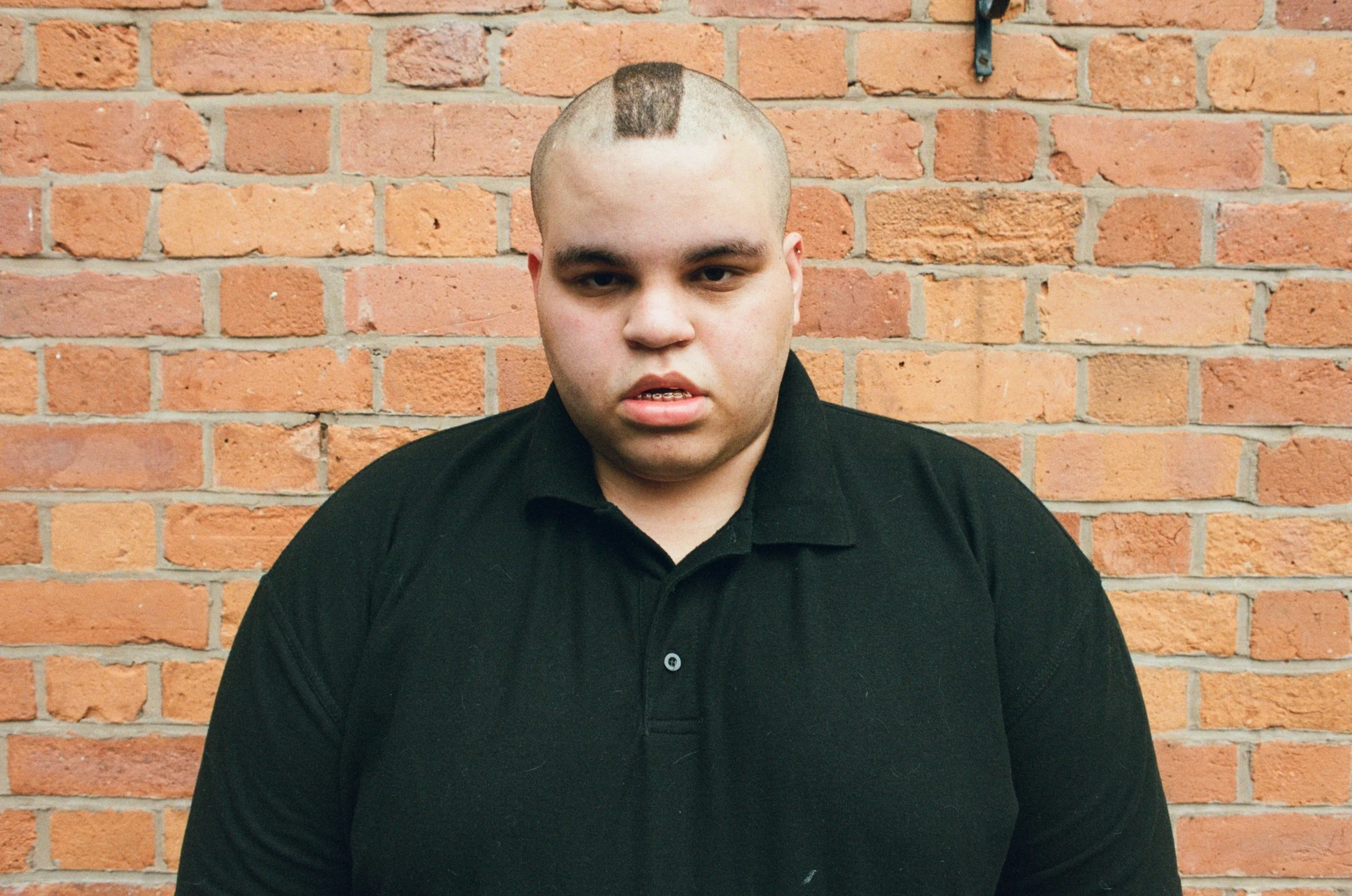
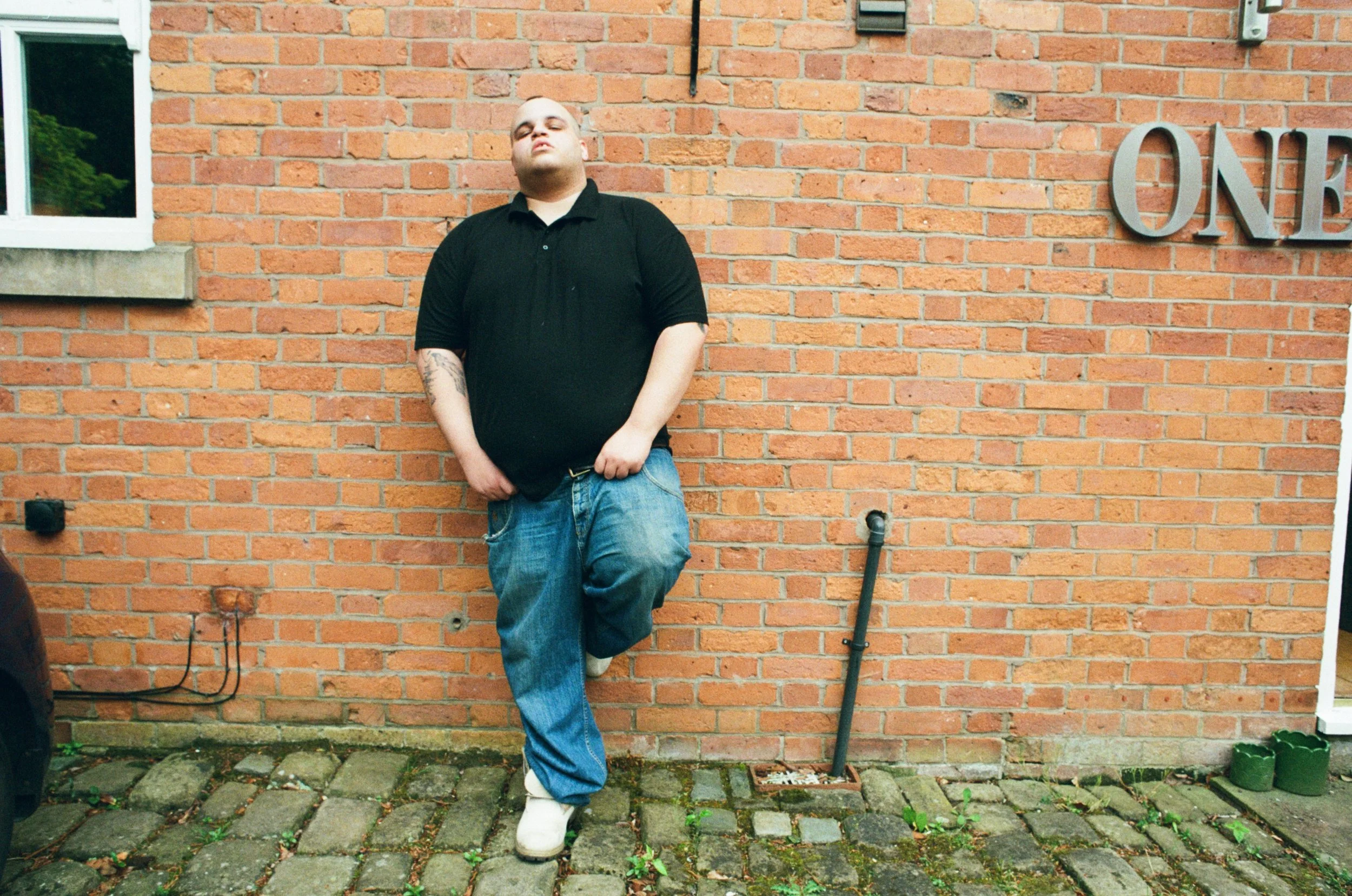
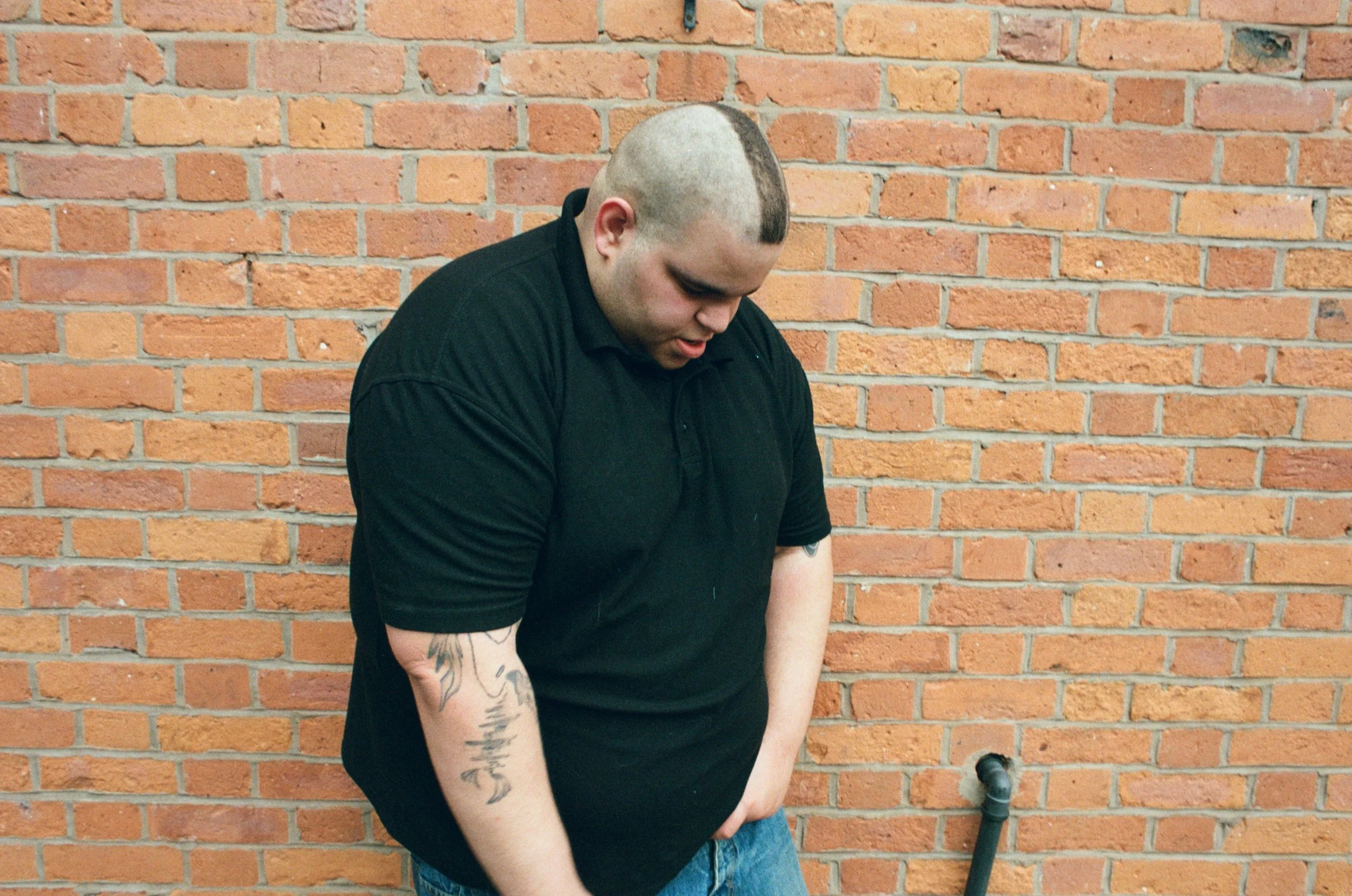
Photography by Olive Gilson
Alisha: Do you dream?
Isaac: I’m not interested in the dreams I have when I'm asleep. At the end of the day, you're not your subconscious. How could you be defined by the passive part of you? But I have always, and still do, a lot of daydreaming. It’s the most therapeutic thing possible for me. I talk about it with my therapist a lot too. I think that daydreaming is a central, if not the most core part of my drive, my practice. It gives me so much space to be optimistic and hopeful. So, I don't really let stuff get me down too much.
A: What's a daydream that you've had recently?
I: It’s gonna sound so silly. I daydream mostly about manifestations, mostly about having a really good job. When I daydream, it's mostly about envisioning how I want my future to be.
A: So you’re thinking about how you’re going to get to where you want to be?
I: I think about, in this moment right now, how would this moment feel if I could afford, for example, a Lamborghini truck? It's that. Daydreaming about the lifestyle. But, it's not just about the material things. It’s also the rooms I could be in or the work I could be doing, or my relationships.
A: Does that help you when you're doing your research and curation?
I: Black Atlantic was kind of a response to my education, and feeling like I wasn't able to get what I wanted from it. There’s a lot of value appraised on archival material, with nostalgia sickness in today's climate. Things are only valuable because they happened in a certain historical series of events. All things existing within boundaries and colouring within the lines are only given attention, that something's only a real archive if it's in a collection somewhere. So, it was an idea in response to this, and I still hold this belief to some extent, that you have to process a found image before it’s archival. I felt like I needed a traditional justification to do parts of what I wanted to do, and I didn’t like that.
A: What do you mean by that?
I: Like the keychains. I would say the keychains are minimally processed images. They're just translated to a physical form, but the images themselves aren't changed. Obviously, I see the reasoning to process images more heavily. But my whole work isn't about archive. I just felt like there had to be a sort of space for me to do that.
A: Is research always part of your process in image making, or for anything you create?
I: I don't really do a ton of research, I save images I like. I sometimes might save pictures just for the way that they look. But I don't do an awful lot of research just because, and I think it's kind of an ego thing, but I just want to be as fresh as I can be in the work that I make. I'm kind of big into not feeling current, like I kind of like when something's a little bit off, when something's a little bit wrong because I feel like then we're kind of actually making something meaningful. I like to do things a bit unorthodox. I don't know how much it relates, but a lot of the drive for Black Atlantic specifically is that, just the simple fact that these images exist, untouched.
A: How did blackatlantic.net start?
I: I started talking to this guy Chi, who I co-run it with. He lives in Nigeria and we connected on Instagram, we just got along and it felt like everything was understood in terms of the swag we’re into. So it kind of became an experiment, originally we were just gonna take pictures. But then we started finding pictures, agreeing or disagreeing and having conversations around them. Originally it was a university project, and I wanted to put them in a book, but my tutor was like, don't do a book. So I built the website with all the images, and then the website was kind of cool. So we were like, okay, this is kind of cool. Now, we're going to work on a book. We haven't really cared too much about the Instagram, but I guess we’ll just see what happens. I’m not sure what’s next yet.
A: What makes an interesting image to you?
I: It just has to be chic.
A: [laughs] Ok, love. What is chic to you?
I: That's kind of all that matters to me in terms of fashion. Repeatedly I reference M/M (Paris) images. I love a lot of what they do and I feel like they really kind of did that thing of making images that didn't feel right. And that's why it was so successful. But then you know, like for Black Atlantic the image or post gathering process obviously is very different because the images all have the potential to be published in a sense. They all have the opportunity to be forward facing. A lot of the images we find are from Flickr searching. Flickr's great, I love it, but it's filled with, I can't even lie, loads of middle aged white people’s holiday photos. I don’t know, if I'm trying to find images in and around like where my Grandma comes from in Jamaica, it's just digital camera pictures of white dudes on holiday. That's literally all it is. Like when I'm scrolling through all of them and it’s just another shot with a beer in the sun and the digital camera flashes on and I'm like [sighs]. So Flickr is great, but there’s just so many forgotten accounts and photos on there, which makes it impossible to reckon with. I guess in a way that process makes me a bit more selective. Whereas when I'm gathering research for my own intents and purposes, I might save something I don't particularly like, but I feel it. I'm into it, but I'm not. Whereas with Black Atlantic, it's more about this has to feel what it is right now. We’re very intentional, we can't have two images from the same vibe.
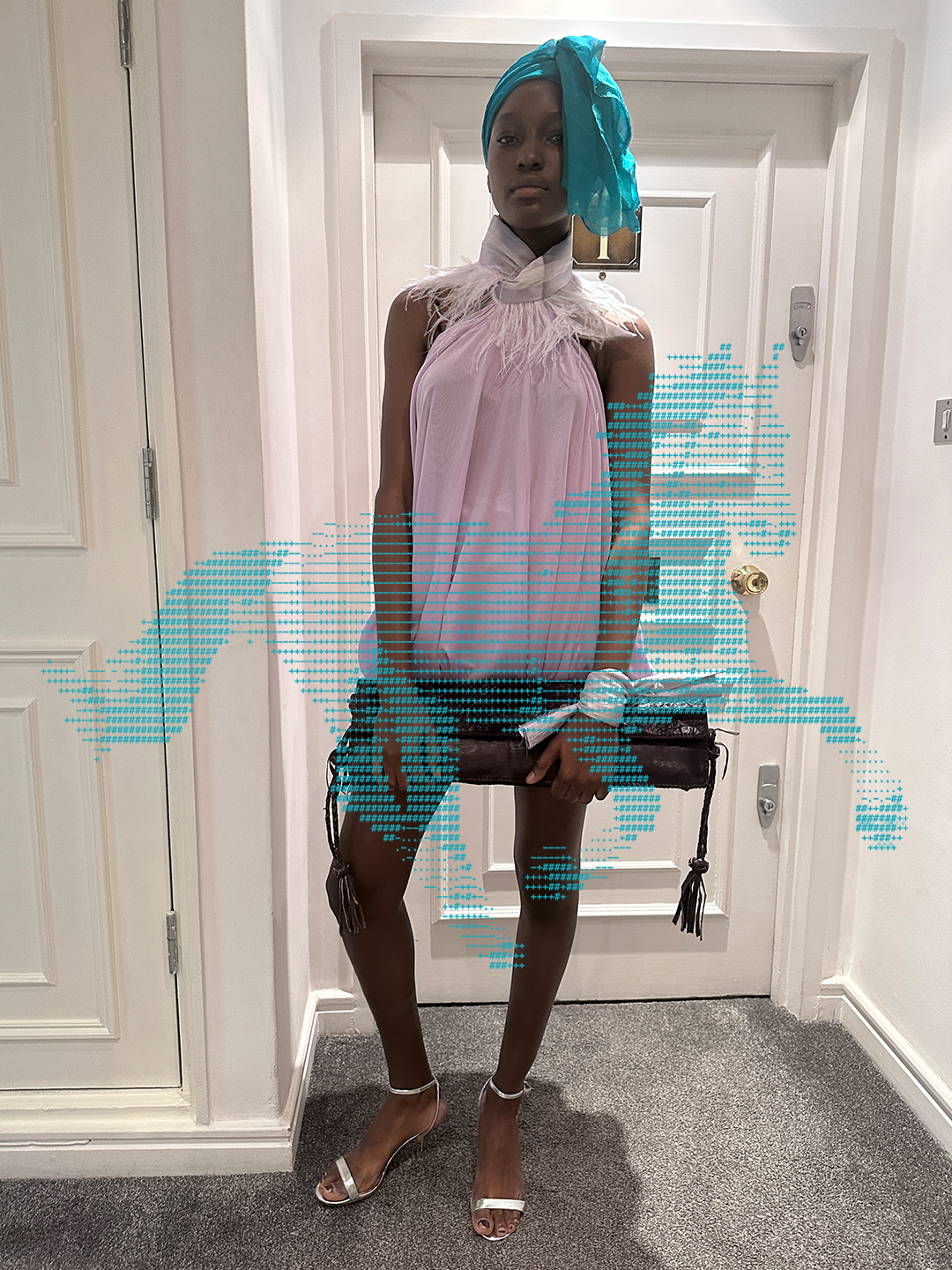
Image by Isaac Dakin for Oluwalaní
A: Do you have nostalgia for when you were a kid? You mentioned about nostalgia sickness earlier, so I’m wondering what does nostalgia feel like to you then?
I: I am nostalgic of some periods of my life, I mean especially when I went to school and I lived in three different countries growing up.
A: Oh wow. Where were they?
I: I lived in Sydney, then Milton Keynes and then I lived in Berlin. That's where I finished high school. But I think I'm probably a bit nostalgic, first of all, for when I lived in the UK when I was younger. When I was at school around 11 to 15, I was studying politics, and if I had stayed on that course I'd probably be involved politics now. I really wanted to do Latin politics and Spanish for A- level. I love Latin, that was my favourite subject. There's a site called work for MPs and it’s job listings for MPs in the public sector and consultancy firms. I look at that all the time. I daydream about that. I daydream a lot about working in a consultancy firm or something. Or even, being a lobbyist. I don't know. I wish I had that life. Part of me really wishes I chose that life.
A: Damn I was not expecting that, tell me more.
I: Just because. I don't know. I'm very into that world as well.
A: You said that you’re projects were a response to the education system. If you were an MP, what would you change about it?
I: The real question is how much power does politics really have to change anything? You know? But I think that in secondary school, I think that the way things are taught are not great, there’s a lot of stifling information. I think the curriculum itself doesn't really allow students to open up the ways in which you can connect with the subject, if that makes sense. I understand, you know, constraints on teachers and stuff. I don’t think it's necessarily for teachers to solve and do it all, but there needs to be more routes to liking what you're doing. Or finding how to do what you like, maybe. That was always a big thing for me. The reason I went to uni to do fashion communication is because it was the only thing that I could do that I would be motivated by. I'm not really one to be motivated by external pressures. It's not a source of motivation for me. It's like, if I'm gonna be motivated by something, it's because I want it personally.
A: So who do you think has the power to change things?
I: Honestly? I mean, the idea of change, on a wide scale, I don't think anyone has the power to change things. But I think the power of change lies with the individual. There are machines, and there's so many cogs in the machine. I think at the stage where we're at economically and culturally, on a global, Western scale, these machines are so big that I don't even think the people we think have the keys to them know where they are. The keys are lost, essentially. It's something that no one has the power to affect. When you look at the leaders of countries, for example Keir Starmer, he has no power on the world stage. Barely any power on the domestic stage. No one pays attention to policy anymore. Like, I don't. I think you could probably go up to 10 people on the street, and maybe only one of them would be able to tell you three things that the Labor government or the Conservative government did that was an actual change in people's lives. Another example, Trump has power, but then people say, well, Trump's just a puppet and people control him. So what power does he actually have? Who actually is pulling the strings? Or does no one have the power? Everyone's just trying to ascertain that they have that power to change things. But I mean, this is such a big interest of mine, geopolitics and politics in general.
A: When you said that the keys are lost, that’s exactly what it is. It's so interesting that you said it's in the individual and not the collective, because at the end of the day, the collective is made up of individuals. So if one person in that collective isn't doing their bit, it's not going to work.
I: Exactly.
A: Do you remember the last dream you had?
I: My dreams are always so nonsensical and I often can’t remember them. But a lot of them are like, I have to go somewhere and do something. For some God forsaken reason I'm unable to do it. If that makes sense. One recently was I have to get to uni, but for some reason there’s no buses, I don't have any service, I'm just like in the middle of nowhere. I try and walk there, but I keep getting stopped by people I know who just suddenly happen to be there. Stuff like that. Which maybe is a sign of my impatience, maybe from my daydreams that I want them to come true immediately. I don't know.
A: That’s so interesting. Mine are always so vivid. Like, the other night I had a dream about Prince William and he had the body of a lumberjack.
I: I’m a really big royalist. I'm a huge royalist. Most people are really shocked. I don't love Charles. I'm ready for Charles to go.
A: Who do you want in?
I: I love William. I love Kate. I love their kids. I love Princess Anne. The rest, whatever.
A: You don't think that they have the power to change things?
I: No, I think they're essentially just public figures, they're like celebrities. It's such a weird dynamic, especially in this country. The irony of them being public figures, but the lives they live are actually extremely typical of the aristocracy in this country that even still exists now. It's just that the majority of aristocracy don't exist in the spheres that non-royalists see or in general. So it's this weird thing because their lifestyle are very out of touch. Obviously, the big debate is the funding of these lifestyles too. But in my opinion, as someone that subscribes to the notion that money is essentially not real and we should be funding everyone's lives, I don't really care that their lives are being funded. The media uses issues with the royals too to detract from other problems. Look what happened to Andrew, the tabloids were introducing emotion to remove him from the line of succession when he's like, eighth in line ahead of like, four, five children. Why are we talking about passing motions or talking about stuff like this? Especially when there’s so many other important issues that are nowhere near being read in the Houses of Parliament.
A: Fair point, but I do think we spend way too much money funding them. Like imagine if that money was given to people who weren’t raised in aristocracy, we’d probably solve a lot of problems in this country.
I: But even if that money stopped being used to fund the royals, why do we think the government would then spend it on us? You know what I mean? But I just love what the Royal family stands for too, I'm just intrigued by the whole culture of it in a way. I'm not the kind of person that will stand behind the barricade and give Prince William something, he’s never going to get anything from me. But I remember I saw them drive past once at Trooping of the Colour, I was definitely gassed. But I'm not ridiculous with it. Also, I felt like the Queen was such a barrier against right wing nationalism and she kind of was the bastion of sensible conservatism that allowed for, so that the Union Jack wasn't scary to people, you know what I mean? And so I think when she died, we lost that in a big way.
A: Even though historically the monarchy had right-wing beliefs?
I: I do think that since the Queen passed, there's less reason for the monarchy. But I'm just a huge fan. It's definitely weird though, I get that from a lot of people. Especially generationally too, it’s not normal to be a fan of royals this young.
A: You're jealous of my Prince William sex dream then?
I: [laughs] I couldn't say I'm jealous of it, but the lumberjack physique could be on brand for a British kingdom. I am anti-Harry by the way, that's how deep it gets. Because I'm just like, bro, see how William embraced his baldness, and it's really worked wonders for him. He's got the beard going, and it's a great look for him. I don't know if you saw Harry walking into the courtroom a couple months ago, but he just hasn't embraced his genes. Which, I think, is embolic or symbolic of a wider issue with him that he just refused to embrace his genes. You've got to know what works for you. Not that I wish him unwell or anything, but I just think he made bad choices. That’s how deep of a royalist I am, Harry is not chic.
Follow Isaac here
Follow dreams here