dream 012 - maya man on reality checks and performing fantasies
One Sunday in late March, the heavens opened as I took myself to a screening of Perfect Blue in Soho. I purposefully left my flat in good time to make sure I avoided crowds, it was after all a sold out showing. But as I arrived, all I could see was a human snake creeping round the building. Joining the tail end with the other fans soaking wet but devoted, I realised I hadn’t queued like this since going to a concert. In the slow shuffle to the front, tickets were locked and loaded on phones ready to shoot through the doors. People pushed to find their seats, the room was full of noise: old friends reconnecting after not seeing each other since anime-con, a group behind me playing film fact roulette (who knows the most was left at a tie).
Perfect Blue was made in 1997, at the dawn of the internet. The technology, and the characters reactions to it, came with an on screen warning from the cinema: ‘don’t be the Travis Bickle laughing just because it’s outdated’. This is how you get a nerd’s attention. The room fell silent, they knew the act was about to start. The film played in what felt like suspended time, I absorbed it like I was high on my sofa; my body melted whilst my face rendered from every thought I had. I could see the girls next to me experiencing the same, yet holding hands the entire time. With the fate of main character Mima becoming more and more uncertain, I suddenly became hyperaware of how many times ‘dream’ was mentioned. Maybe for obvious reasons (welcome to my blog), but by the end, I realised it wasn’t a coincidence.
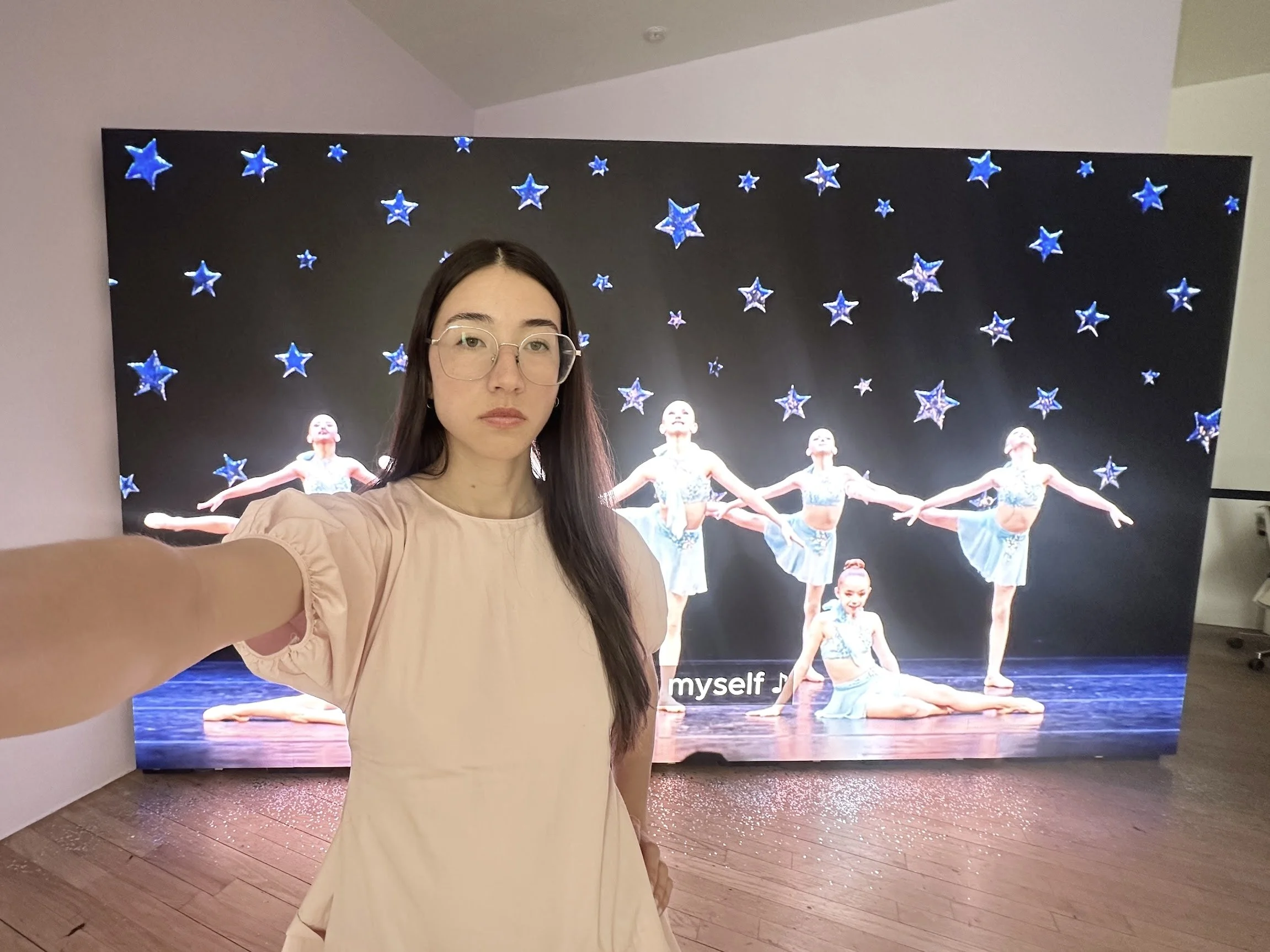
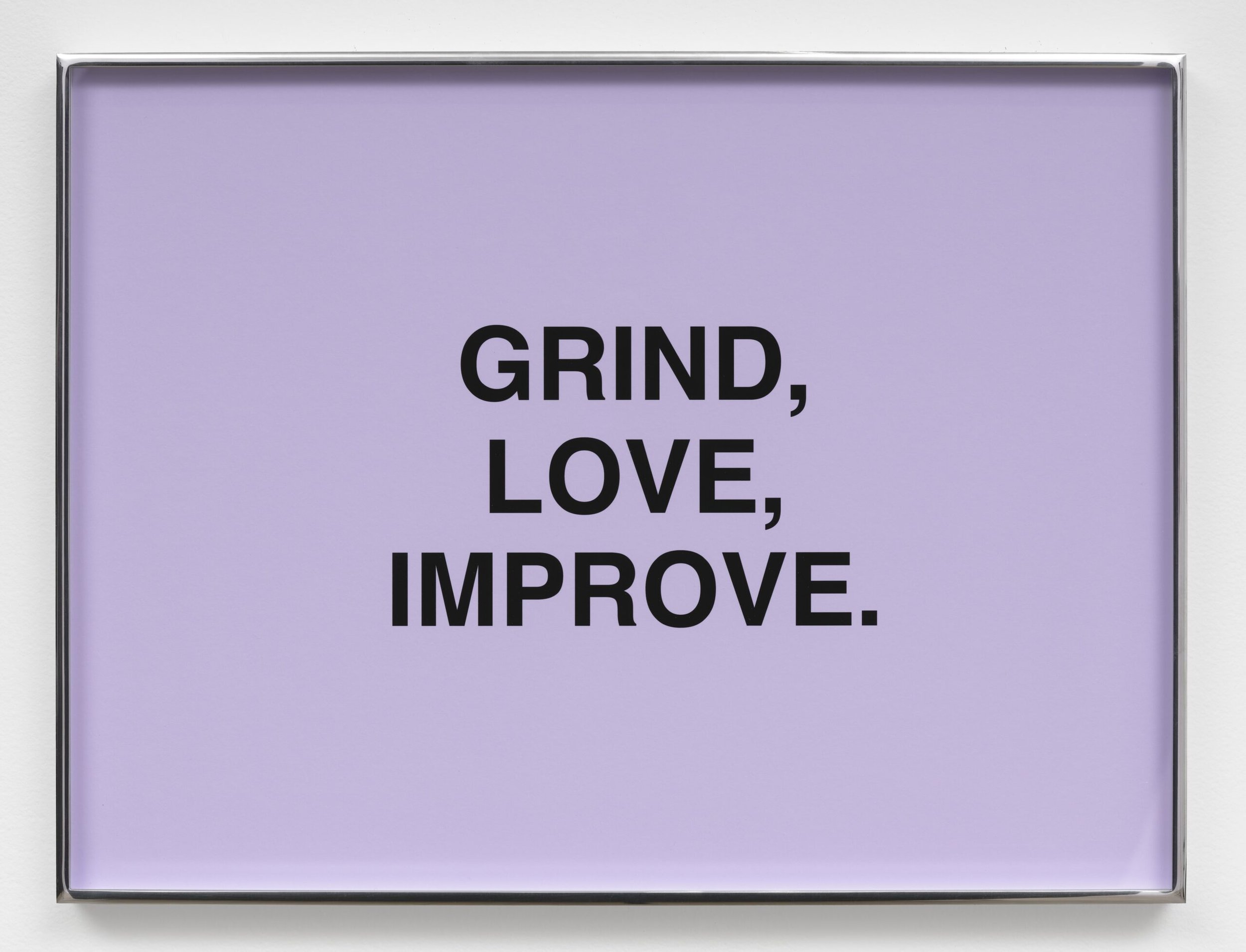
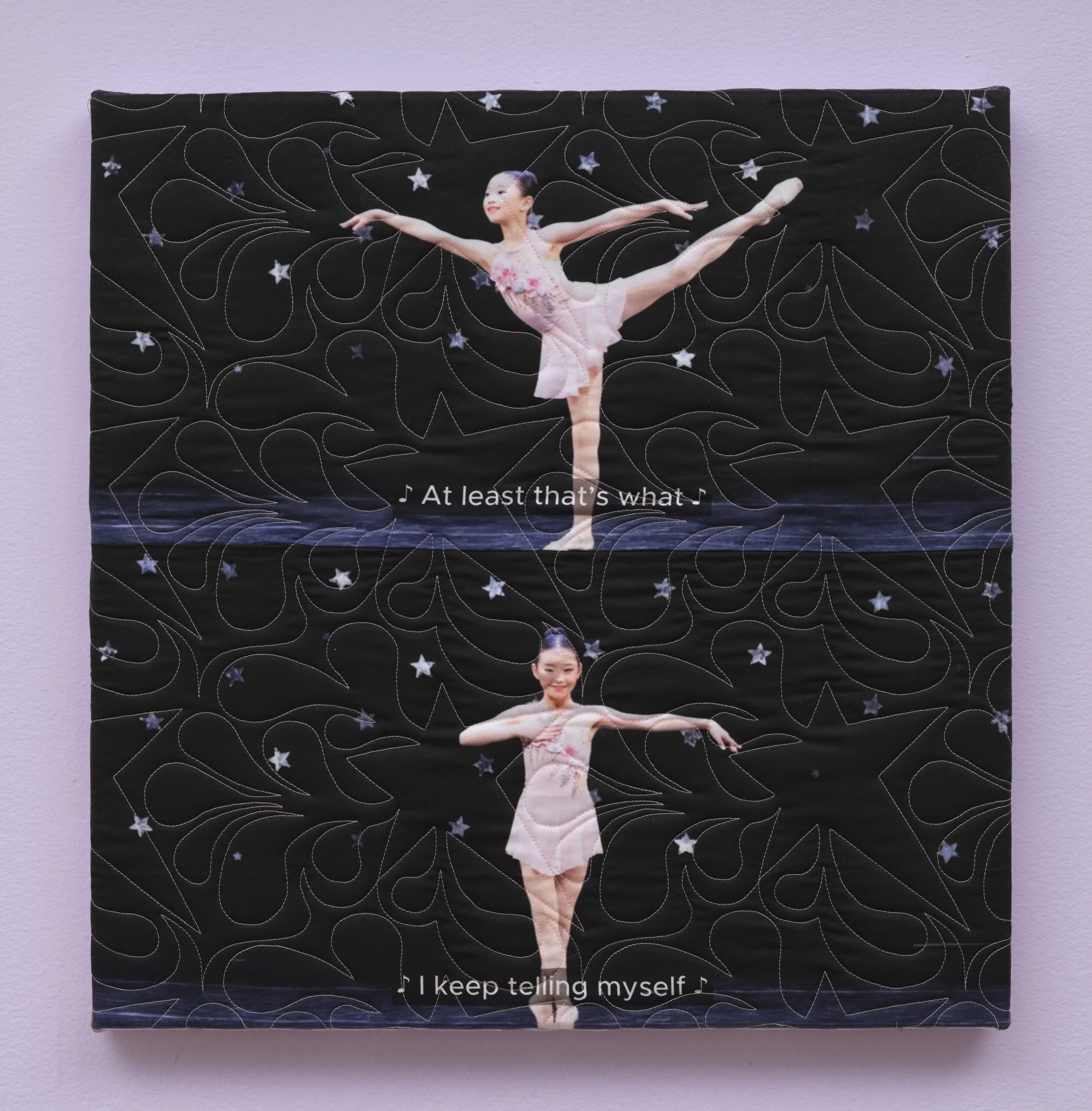
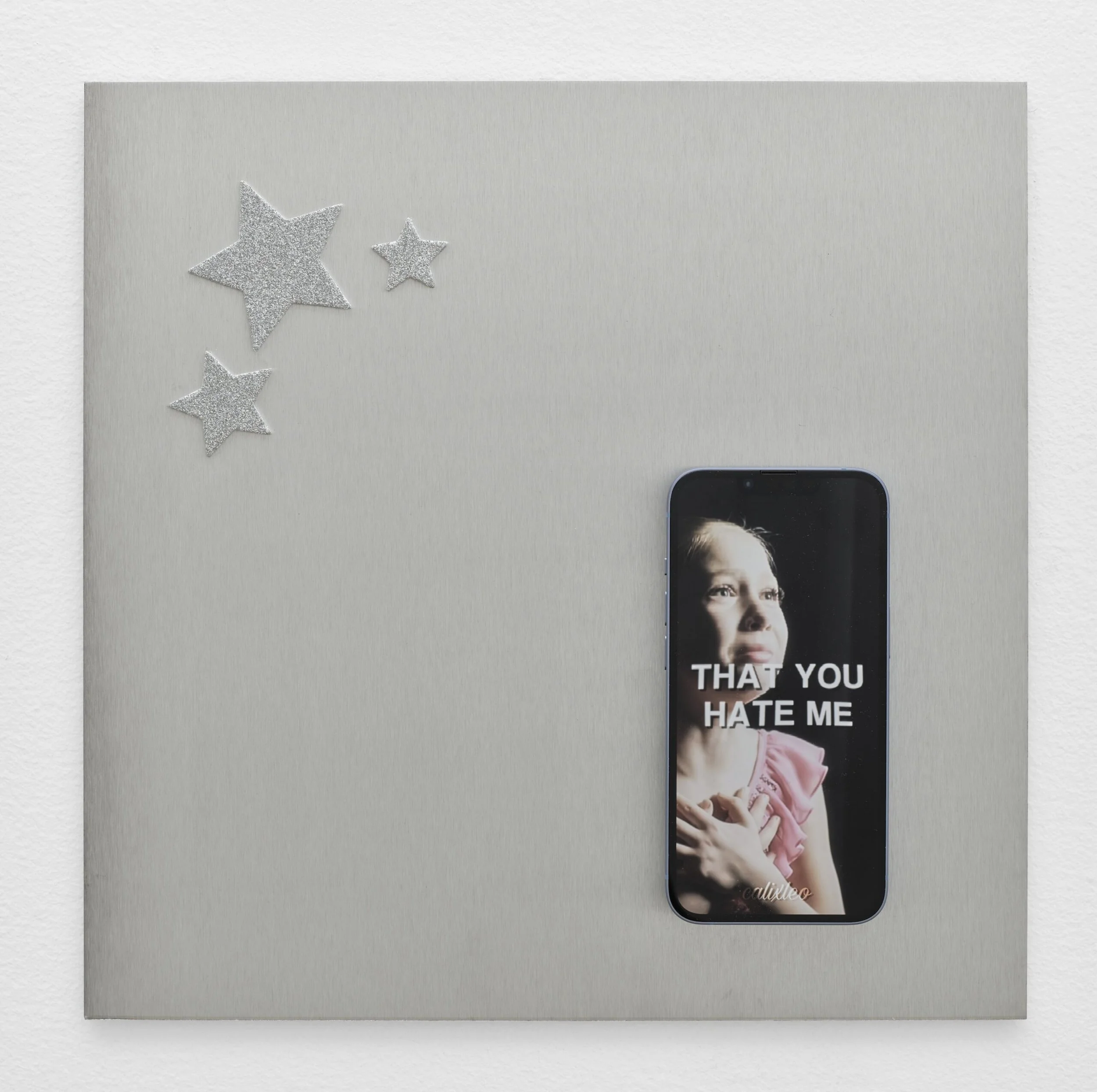
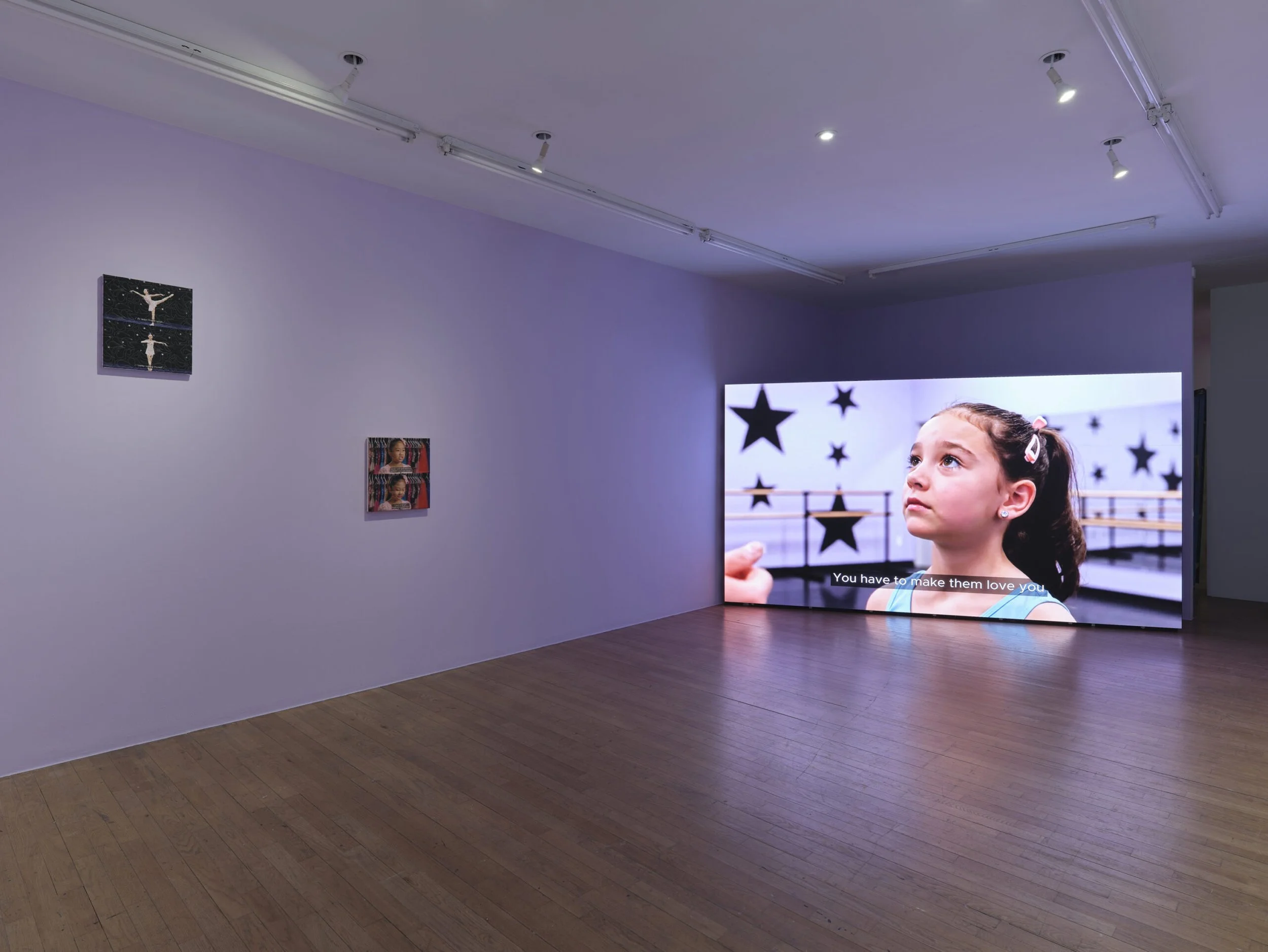
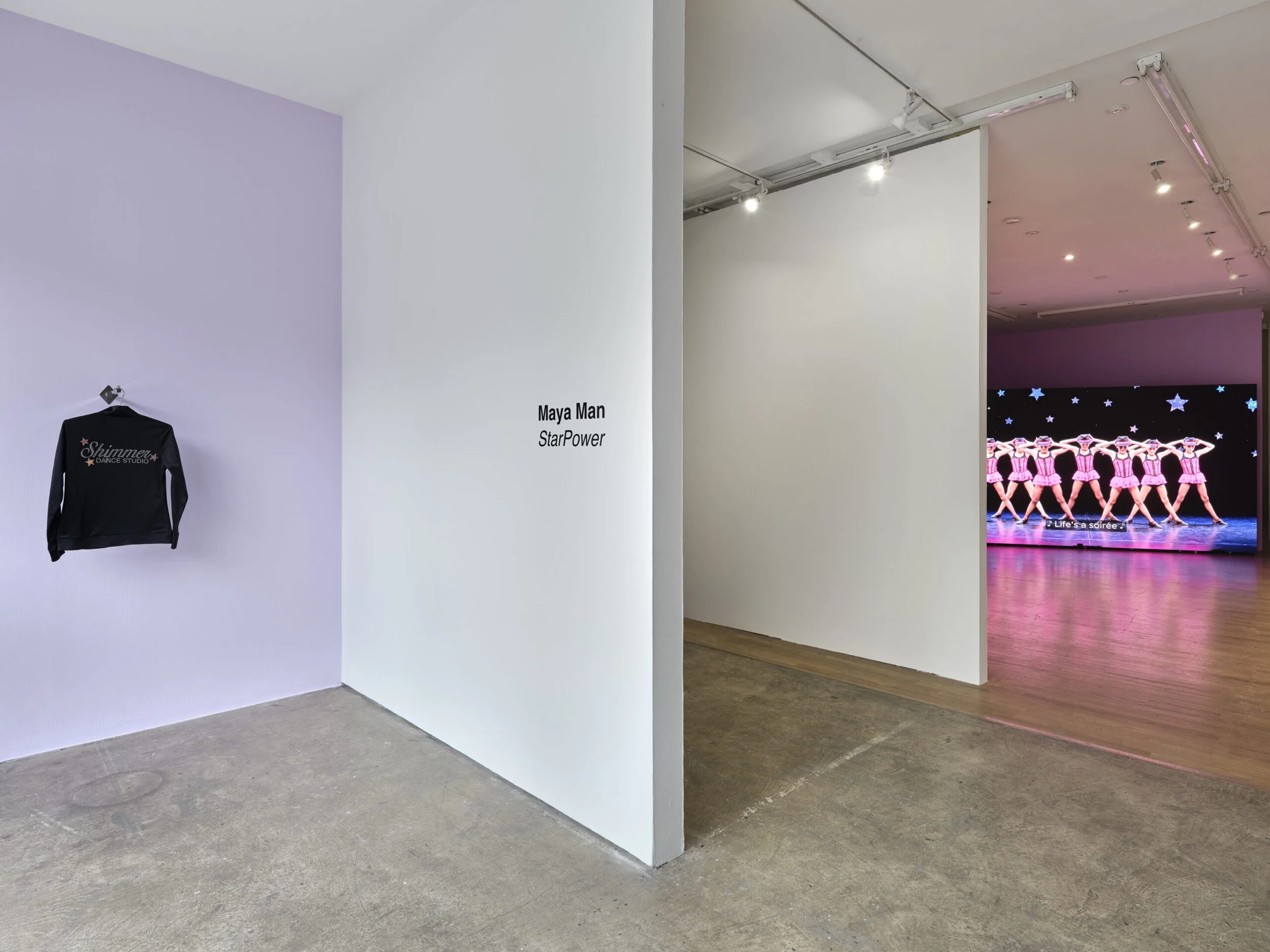
Much like the work of Maya Man, Perfect Blue explores the gap between reality and our idealised self. A consequential dreamlike state of performance we participate in within our ever increasing technological world, Maya’s recent work as part of StarPower at bitforms gallery suggests this parallel with American dance culture: “I think it's a really clear analogy for gender and performance for everyone in life, which is why I'm so interested in it.”
Leaving the building, and stagnantly rejoining the snake of fandom, I found myself listening into the conversation happening in front of me. A girl asked what her male counterpart thought of the film, he scoffed, “it was basically a porno.” Stifling her reaction, she replied “I thought it was really intense,” as she looked down at the floor, “it must be what it feels like to be in the industry.” On a video call in early April, I was blessed with a vision of Maya against her bright white studio walls. We chatted about everything from dream journals to Donna Haraway, then somewhere in the gap between, Maya brought up the topic of Perfect Blue.
alisha: Do you dream?
maya: There was a period probably seven or eight years ago, where I got really into trying to lucid dream. I read this book, A Field Guide To Lucid Dreaming, and I would try to do checks during the day, to see if I’m in reality. I would look at my hands, look at the time, or try breathing while holding my nose, I found it really hard. But apparently I had a common experience, when you start trying to lucid dream it happens almost right away, but it's very hard to stay in that state. I've always been very compelled by this idea of what's real and what's not in my work, especially in relation to the internet. Also, I think that was a little bit of my interest in dreams and lucid dreaming. Even though I don't actively do that as much anymore, I do keep an ad hoc dream journal on arena. It’s private.
a: It’s private?
m: Yeah, but I was looking back at it just before we got on this call, I started it in July of 2022. I pretty much just wake up and write them and never look at them again. So it's weird to look at.
a: Do you do it every day?
m: No, I don't remember my dreams every day. It's really if I wake up and have a clear memory of something very specific and very strange that happened in the dream.
a: What do you dream about if you remember them?
m: A common stress stream I have, which, everyone has their own version of this, but mine is that I get on stage at a dance competition, and I forget the choreography. I'm standing on stage and I simply cannot remember what I'm supposed to do, so I start moving through motions to try to follow what everyone else is doing. That's still really strange to me, because obviously I haven't been in a situation like that for a really long time, but it's so common that people have stress dreams. But that kind of confirms, for me, something in my psyche about being on stage.
a: Yeah mine is having a dream about someone I haven't thought about in a while, but I've messaged them, and it’s so vivid when I wake up I have to check if it was real. But the dance thing is so interesting because your recent work is about your childhood connection to dance too, right?
m: Yeah exactly, it’s about growing up in American competition dance culture and the psychology and stresses that are part of that world. It has been for me, really strange to fully confront how much of that growth, that conditioning, has carried over to the way that I live my life now. It's wild that those experiences stay with you so much, and I always feel so strongly that I really dislike when adults try to diminish the drama or emotions of children in these situations that they're going through. Once you're an adult, you have the perspective that, the dumb drama that happens to you when you're a kid, doesn't matter. But when you're younger, it is all encompassing. And of course, the present is so all encompassing. So, I think it's interesting also to look back at certain things that you go through when you're a kid, and realise it is consequential.
a: How do you manage to process the present? Do you feel like you are present a lot of the time, or do you feel like there is a distance between what you're seeing and what you're thinking?
m: I’ve always felt like there's a big distance between me and the ability to feel like what I'm experiencing is real, which is always kind of the engine that drives all of my work. On a personal level, it's always been really uncomfortable and confusing for me too, and I think that is in part why I was interested in lucid dreaming. It's also why I'm very interested in theories of reality and simulation theories and theories around performance. I don't agree with the the idea as a whole, or all of his writing, but Nick Bostrom has this theory of simulation, where he implies that there's a high likelihood that if we've reached the ability to simulate reality. We're going to spawn billions of simulations. So probability wise, it's likely the one we're in is a simulation if we reach that point of technologically. But I've always had this feeling that actually, I'm very relieved to think that everything is a simulation. I find it comforting. I have a lot of anxiety around making decisions, which is what living is all about, especially what being an artist is, and the consequences of my decisions. The idea that there's some sort of engine or some sort of agent at play that's not me, whether it's a higher power simulation is very, very comforting to me.
a: Yes, that made me think about how dreams, in a way, are quite similar to internet aesthetics, because through them you're processing you’re reality.
m: I totally agree. I think the internet is a very dreamlike realm. Wait, this is just reminding me. Now I need to look this up. [searches google] There's a line in Perfect Blue about the internet being a dreamscape.
a: Ok I literally went to the cinema last Sunday by myself to see the rerun of it. It was a room full of nerds who all smelt of BO and I was like, this is perfect. But there was so many times throughout the film when they mentioned the word dreams and obviously the blog Mima’s Room became a microcosm for what was actually happening to her.
m: Exactly! I saw it was a long time ago, but, I remember really resonating with the surrealism that they continue to find and the constant suspicion that you needed to have around what was real and what's reality. The line between what's real and not is so major in the way that people talk about the internet. I've tended to argue that the internet is just as real as a physical world, and I don't understand when people undermine it. But also thinking about literal dreaming, it's very strange that it's something that we all participate in every night, likely, whether we remember or not, but it still harbours all these mysteries and unknowns.
a: As I was leaving the screening of Perfect Blue, this guy and girl was in front of me, and she asked him what he thought of the film. He said, it was basically a porno. I could tell that she felt really disappointed by his reaction, because she looked quite sad as she said she thought it was really intense. It made me think how it’s a much wider reflection of systematic issues. Through your work, you explore this the idealised self as a gendered experience, can you tell me more about that?
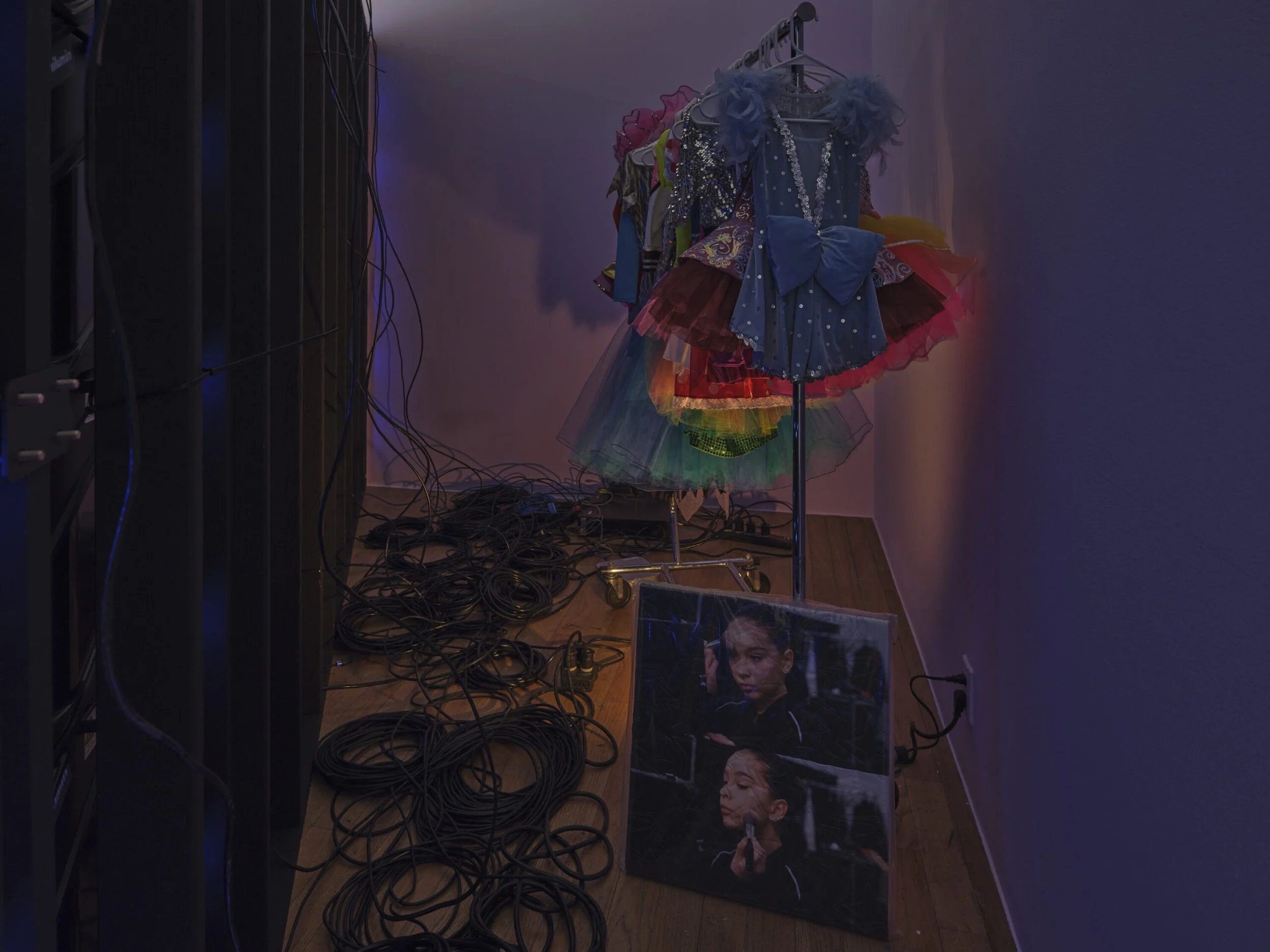
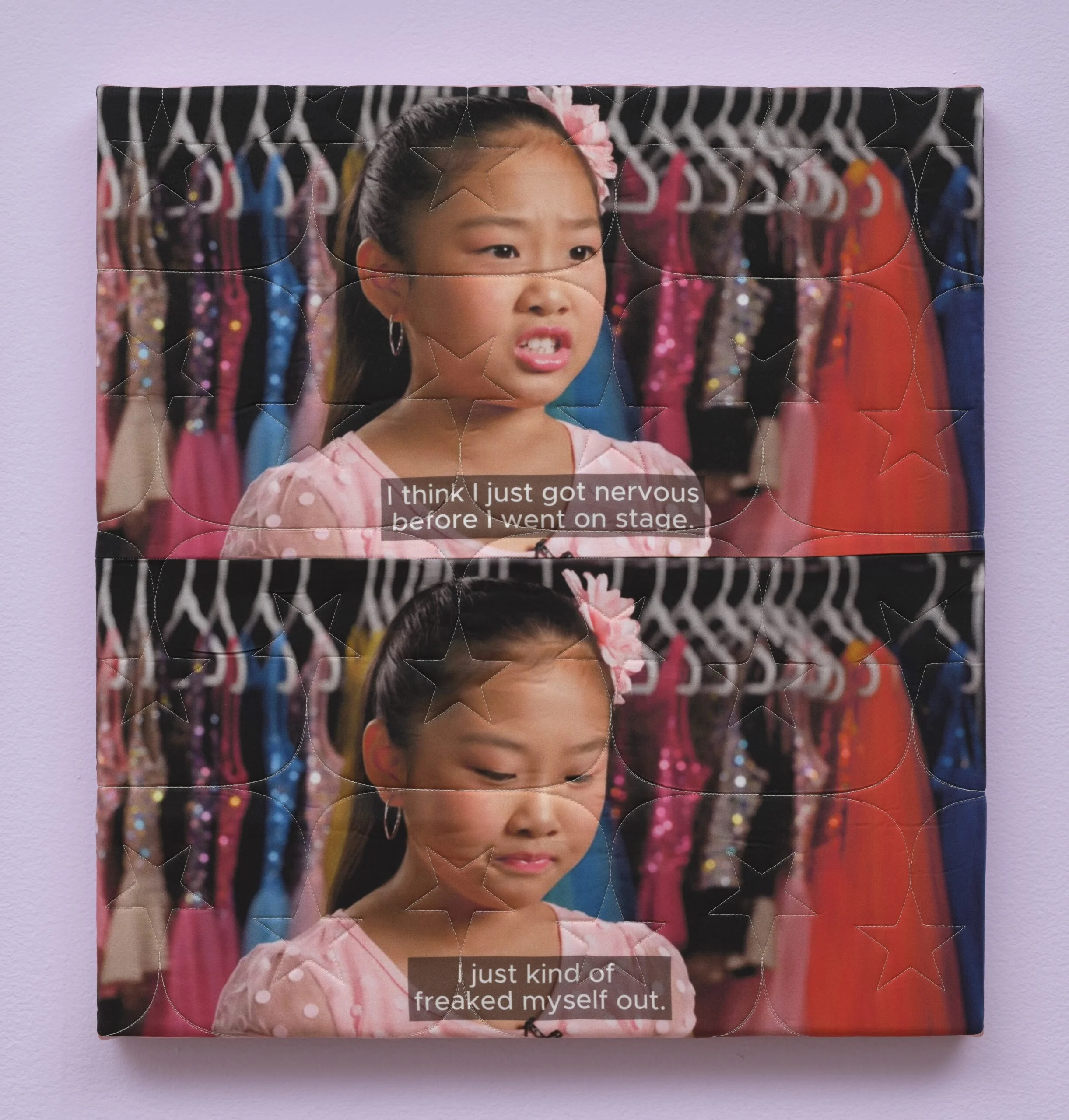
m: The feminine experience is to constantly struggle with this destabilisation of the self or your self concept, because there's so much cultural conditioning that is imposed, especially on women and young girls, that implies you need to be performing in a certain way. So there's always this feeling that there's a known gap between your aspirational self and your present self, and a lot of the performance is about trying to close the distance between those two concepts. My recent work that focuses on competition dance, those opposing forces are really heightened into the competition dance world. You're expected to wear these super sparkly, mature costumes and intense rhinestone eyelashes, lipstick and crystal earrings all when you're really young, whilst performing really complex choreography and trying to look effortless. It's all very endemic to the competition dance culture, but I think it's a really clear analogy for gender and performance for everyone in life, which is why I'm so interested in it. On top of that, my recent work is really focused on artificial intelligence models, what they can do, and what is, to me, very scary about them in the way that they can play with our perception of what's real, and then therefore sway people's opinions and ideas about what is real. Our images are such a powerful weapon, essentially, because people's minds are changed all the time by the content that they consume. I think it's important that we treat pop culture and images very seriously as tools for manipulation. It’s been interesting clarifying that making this piece, because I think a lot of my work is about cultural subsets that are often not treated as serious or treated as intellectual, or they're often seen as low brow, as much of mass culture is generally seen. But, you know, I think that's the thing about popular culture and mass culture, is that there's a lot of people who are consuming what that type of imagery, and if you have these tools that can fabricate experiences or moments, and then proliferate that as mass culture that's very scary. I hope people understand that the piece is very concerned about AI and also concerned about the fragility of reality.
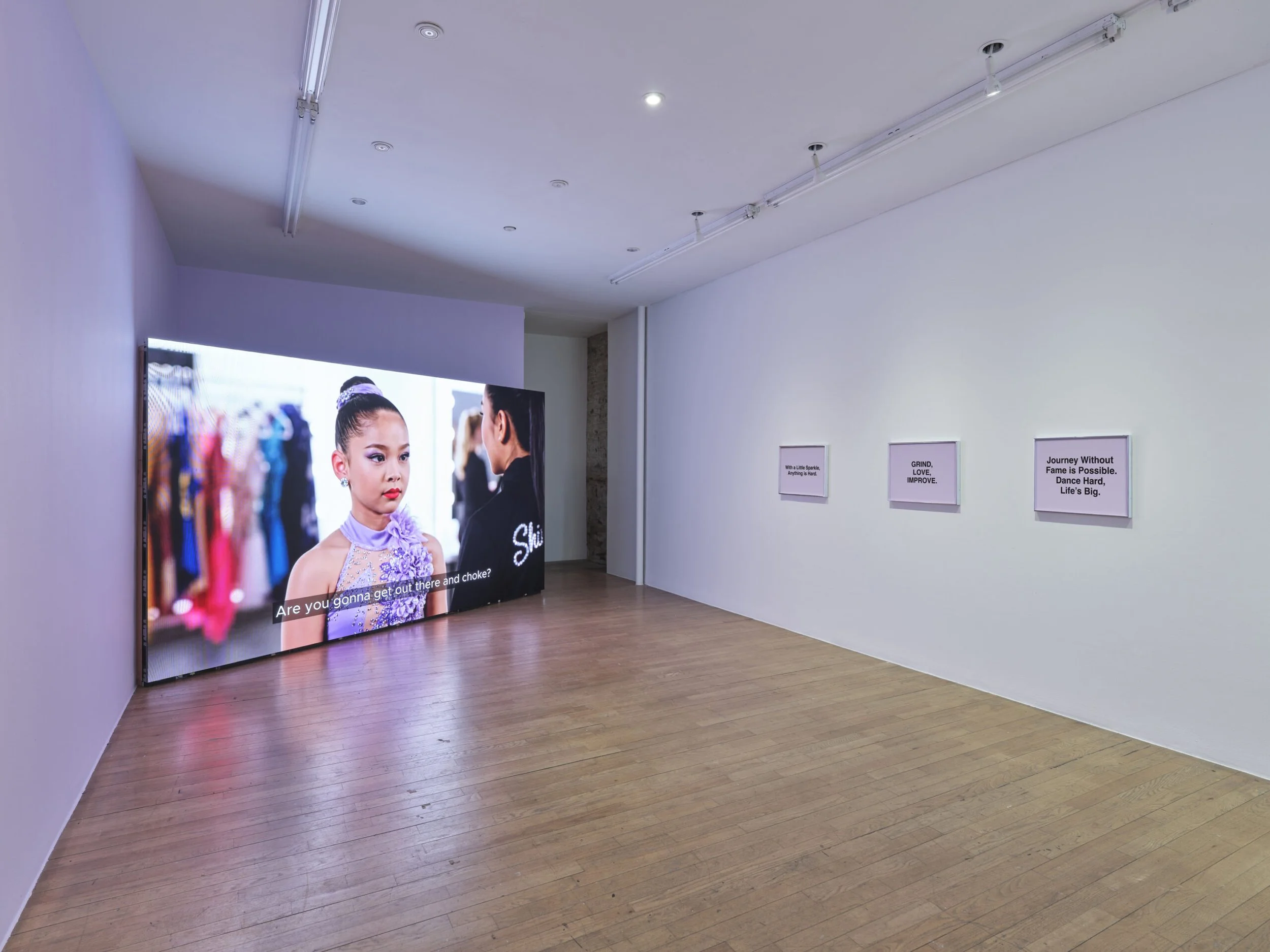
a: How do you think AI is affecting the experience of being a girl online?
m: I think a lot about these ideas. Donna Haraway’s Cyborg Manifesto, is the idea that we're, from a feminist perspective, augmented by these technological tools considering how they kind of complicate the grand narrative around the idea of the self, and piece into the self in a way that augments everyone's character concept. I really believe, we are very much intertwined with all of these technological tools. Every platform that I've ever engaged with or that I have a profile on I feed into it, and it feeds into me in terms of how I think about myself. So with AI, I think that that cycle is going to happen, and is already happening with a lot of people. In terms of the identity of girl and how that manifests online, I think it’s very much, outside of it being a super gendered concept, it's really an implication of imagining yourself performing for an audience. So with AI, I think it's a huge conversation that needs to be happening from a million different directions. I think with all the different types available, they will augment people at this hyper pace of production. I find it quite frightening, but I have yet to draw any real conclusions.
a: As you were saying, a lot of your work is about arguing how real the internet is. Have you ever had relationships with digital beings?
m: I haven’t actually spent any time talking to the AI characters, but I would be curious. The analogy I have for that experience is really celebrity culture and fandoms, because I have felt like I've been following and engaged like a pop star's life that I’m a fan of, but if I haven’t seen them in person, then they have the same degree of realness to me as theoretically an AI character, if all I'm seeing is digital imagery, video, text and music. But there's something about the ease to which we've kind of developed the need to form parasocial relationships with celebrities or I’ve had relationships with artists online some of which have become my friends but that’s a different territory. I often have very strong ideas of relationships to people that I actually haven't had a face to face interaction with, and I think that's become totally normal, we've been kind of moving toward forming relationships through the screen solely for a long time.
a: Do you think the way we project onto digital beings is different to human beings?
m: I guess it comes back down to the projection of dreams and fantasies that we have with celebrities, like K Pop idols and the level of control that is exerted over their image, and like the distribution of their image and content online, to Little Michaela. There’s already been this proven concept that people will attach the idea of a character with the knowledge that the character is not real. It's not a secret that the character is not real. That’s always been my general thesis about generative art, because even the work I made for my show in 2023 was generated horoscopes and readings. The idea was that, obviously, they're not written by the stars, they're not written by the person, they're written by an algorithm. But still, despite that, I think people can find meaning in them. That has always been a fascinating idea for me, and that's why I like making generative work, because I'm being very, very upfront about the fact that it's not made entirely by a person.
Follow Maya here
Follow dreams here