dream 010: luke pickering on nightmares, being held and anti-nostalgia
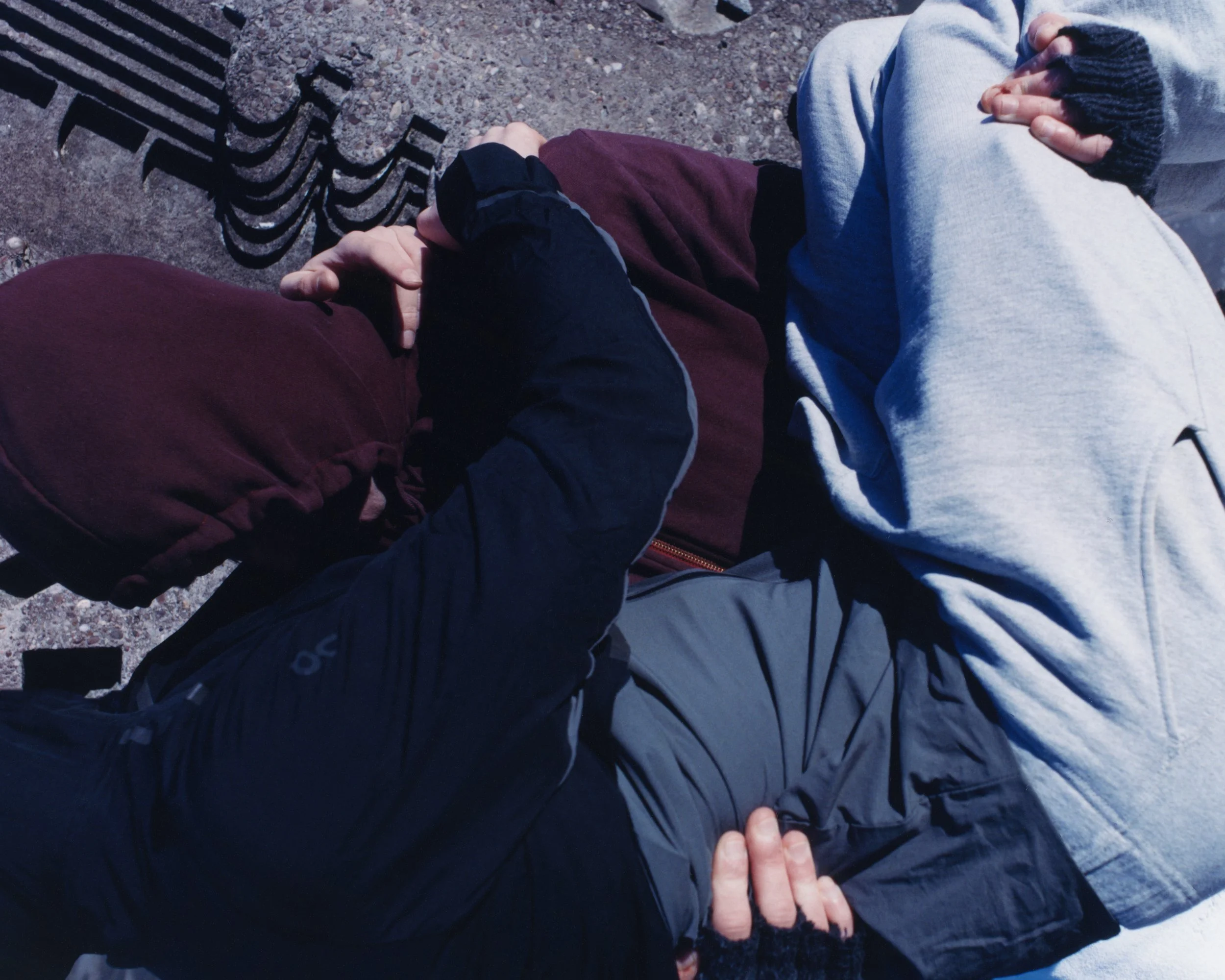
Images by Luke Pickering
As a child, people lift you, put you on their shoulders, and keep you close to their chest. You want to try everything, not knowing the consequences until it’s too late, raising your arms to ask for safety or attention. Touch as communication seems innate to children, perhaps stemming from being held so much themselves, not knowing what they need until they receive it.
Last Friday, I curled up in the corner of London’s smallest coffee shop, trying to finish this piece. That morning, my PTSD had been screaming for attention, so I went out. Not long after settling down, I quickly became gridlocked. Two Mums and their strollers cruised in and parked up next to me. With routes blocked on either side of me and all other tables full, the only space remaining was the seat directly opposite me. So, naturally, that filled up next. Feeling trapped, I started dissociating. I had no one to lift me out. Stuck, wriggling, I felt like a ladybird that had been flipped onto its back. But, instead of kicking my legs in defeat, I breathed into accepting my fate, and suddenly I began to feel held by these strangers, even though I didn’t know I needed it more than I realised at the time.
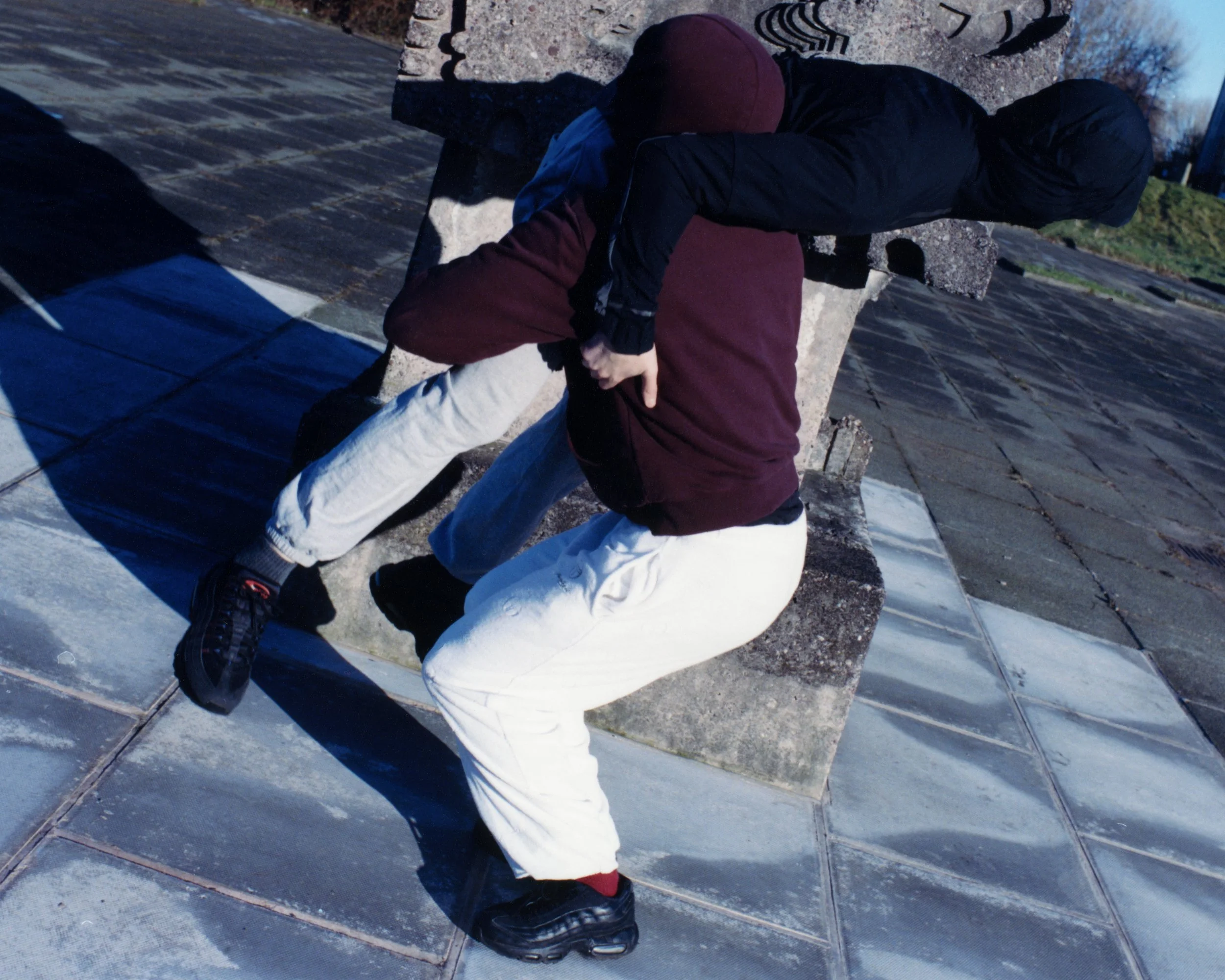
One morning in February, I had a call with photographer Luke Pickering. Sitting against a white brick wall in his old job’s office somewhere in Manchester, he told me he was leaving soon to get lunch. I had just woken up. Eager to ask him about what he’s been working on, there’d been a particular set of images I’d been keen to interrogate. With plans to build them into a wider body of work, they have a tenderness underscored by his cinematic blue-toned blueprint that makes them recognisably Luke’s. This time, exploring what it means to be held.

alisha: How long have you been thinking of this concept?
luke: Errr, this is hard for me…I never really use words to explain my work. I never write captions, I never really write anything. I only have conversations once in a while about work with my flatmates or people in the studio. You know, if I want to talk about literally the most random thing, or something technical or something like philosophical about work, I know they’re there. But naturally, it just ends up not being that often.
a: I wanted to specifically ask you about this concept for these images because, since you first told me about your plan for them a few months ago, I’ve been thinking about this idea of being held.
l: I remember I was in London shooting and I stayed in this hotel that's pretty far away from the office. You can feel so fried, you can almost get triggered when you're down, and you've been travelling, it’s all a bit of a mission. Anyway, I can't sleep, and I'm just in this room. Sometimes, once in a while, I’ll have an evening where I’m just up thinking of things to shoot, and this was one of them. It’s not true documentary style, obviously, and I like this looseness. I don't think it has to define anything, it's like an undertone. I was just thinking about how as you get older, your inhibitions come in. When you're younger, and you're playing out as a kid, the way you communicate with people, you’re more playful, you’re play-fighting, you're picking each other up, you're interacting with the world a bit more than you do when you're an adult. It’s almost a more conscious, mindful thing. Whereas when you’re an adult, it can sometimes feel passive, just moving through life. You’re not running your hands across the grass or whatever.
a: Childlike wonder, we need more of it.
l: So I think it may have come from a desire for mindfulness, I want to feel like that every day, to be present and notice things.
a: When you were saying that then, it made me think of when you'd play out, and you'd feel the cold chains on the swings, and your hands would literally be red raw from gripping onto them.
l: It’s those weird, uncanny moments where you’re staring at something, and you catastrophise how that plays out in your head. I didn't want it to focus too much on the idea of being a kid and playing out, maybe more so, there's just these two people that are interacting and being present with each other.
a: The location seemed perfect too, because it’s so liminal. Do you have a personal connection to it?
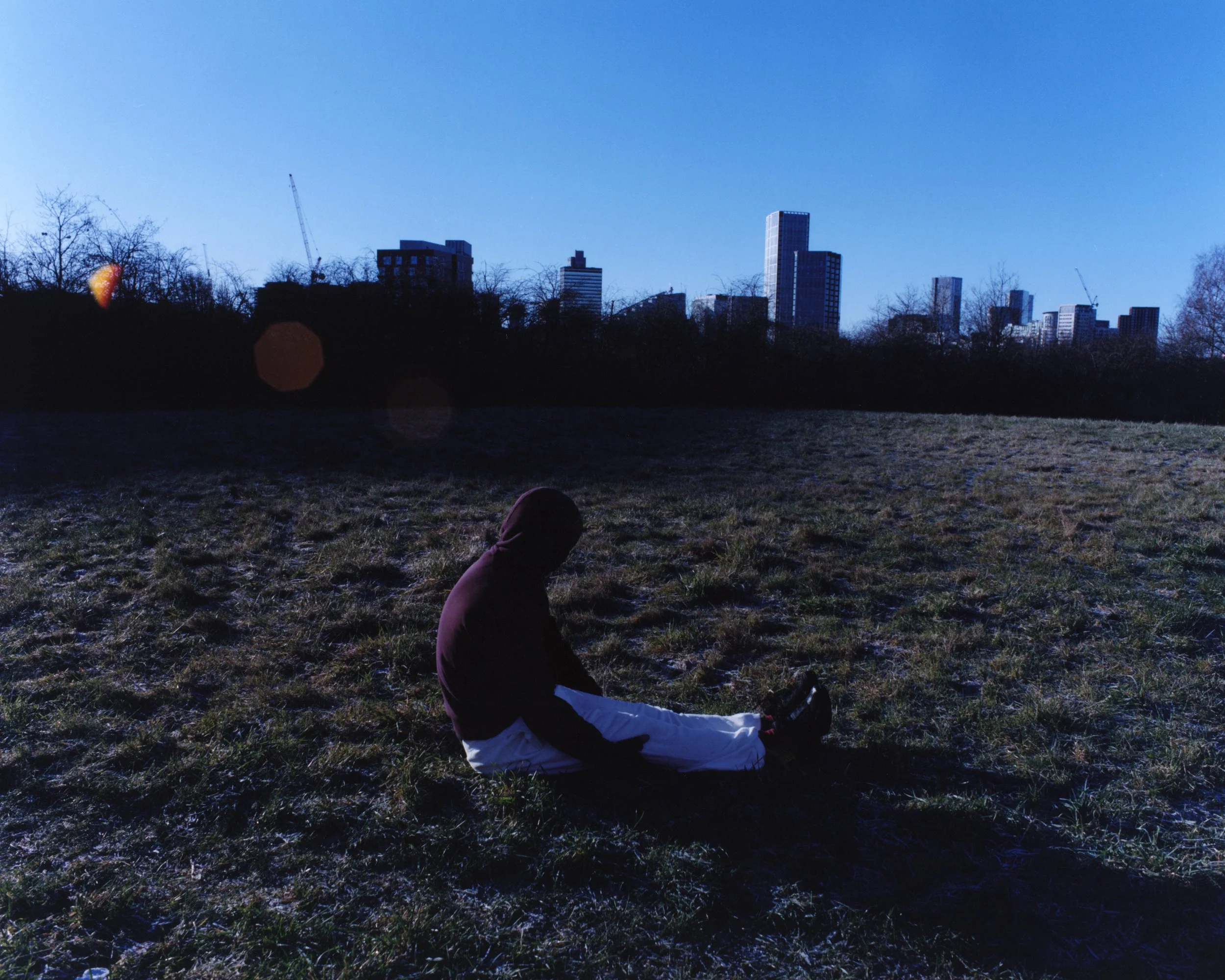
l: We used to live not far away from it. It's just a weird place. There's a random big egg sculpture. But it reminds me of places back home in Telford more than in Manchester.
a: So there’s a sense of nostalgia attached?
l: I’m quite wary of playing into the idea of something that is not a contemporary experience. So, although it's inspired by memories, it’s more about taking something from those times and using it to create the now. Rather than I'm trying to recreate the past, because the idea of youth and nostalgia is explored too much, in my opinion. Not that it's not interesting, but I'm mostly interested in the contemporary, I guess.
a: Can you explain what you mean by that?
l: There’s so much value in the past, but this is the time of our existence, and there’s no way of processing it. But I want to make images that try to process what’s in front of me.
a: That makes sense. There’s so much happening in the world it’s hard to navigate, but it’s a privilege to even have the time to think and create. Simultaneously, it’s so so important that we do.
l: Yeah, exactly, I think I’ve been observing this feeling since I was young, maybe not in a mindful way, maybe in more of an escapism way. Always looking, deciding what to do and not liking what I'm looking at in my environment. Being observant of what's going on, but also it can distract you from the present. And then I'd say for me now, I don't know, I just have a compulsion to do it, it just lets me work. It’s not really therapeutic all the time, but you do observe so much more.
a: Yeah it’s like an emotional time stamp, photography's obviously changed so much in the past 10, 20 years, but I think it's really nice to use it as a practice to be present because I feel like it is so difficult to do that, especially now everybody's kind of coming to terms with the fact that the world's ending…
l: The other thing is it's great that you can stylise an image, because you can photograph something which isn’t really there, it has to be really there in real life. You know, it has to be really going on, but it's not an honest medium. It's not a fact. You can make things, you can bring more attention to certain details, and add a whole other layer to the way that you see.
a: That's interesting, because I feel some people would argue that a photograph is a document.
l: I mean, I don’t know it can I guess, but when I'm printing in a dark room, my colours are not true to the eye.
a: Yeah, the way you shoot as well, it feels very cinematic, because of the majority being in landscape and having your signature blue tones. How did that come about? I immediately associate those blue hues with your work now.
l: [laughs] I’ve not always shot like that. Just slowly, I’ve been building this visual language. Sometimes when I have visualisations, dreams, it looks like that, you know? And I just enjoy it. What's interesting is that when I've been doing EMDR, sometimes I have really vivid visualisations. One of the first times I really noticed, I had one where I was in my room, where I was growing up. The room was floating in the sky. But it's still a room. I could also see through the third person, standing outside, seeing myself, and the sky is stormy.
a: Yeah, I’ve had that with having EMDR too.
l: It’s maybe forcing me to be a bit more present with what's going on between the contemporary, but it actually allows you to find value and communicate things that are going on inside your mind. Which is, I’ve felt, a realisation that every single person has such value to what’s going on in their subconscious. It's just great to learn, and take something that may be a really abstract thought or a concept that your mind just communicates to you somehow, then make work out of that. Reaching in deeper than you maybe could do alone. That's the two sides to it, I think. It's noticing they're both connected.
a: The EMDR process is literally like taking you from one side of your brain to the other, and bringing you out of the past into the present. So it does make you have very vivid dreams. Do you dream a lot in general?
l: Lots of nightmares. Not as much as I used to, but I rarely ever have a good dream. And if I do, it ends abruptly.
a: Have you ever tried lucid dreaming?
l: I tried it when I was 17, but I can't remember what happened, annoyingly. That’s why it’s so interesting, actually, doing therapy and EMDR I’ve always been interested in psychology, so it’s intriguing to actually see how my mind works. Photography is so closely tied to psychology because, as we've talked about, it’s about figuring out your relationship to your surroundings, other people, and the world.
a: I always ask people as well what their last dream was, but if you have nightmares, you don’t have to tell me.
l: No, it's fine. I had one not long ago, maybe five days ago. I always try to remember them the next day… I know what it was! I was at my Dad's house. My Dad was there, my brother and my sister. We were all talking before bed, and as I said, I’m going to sleep, the house looked different as I walked into my bedroom. As I'm in bed and I start to get freaked out about ghosts, I get up and walk into my Dad's room. The curtain in the room is being pulled up, like a ghost by a ghost, as in it's underneath it, a ghost with a curtain over his head, but it's being pulled like a ghost is doing it. Then I wake up. That's how most of my dreams are, a lot of them end with basically me having proof that ghosts are real.
a: Do you think ghosts are real?
l: I've not got evidence, I’ve not seen a ghost, but I do believe in them. If someone told me they’d seen one, I’d believe it.
Follow Luke here
Follow dreams here