Fucking Jesus Christ, or Jesus Fucking Christ as says the Supreme x Vacquera hoodie, is at the crux of Ken Russell’s 1971 masterpiece The Devils. Recently re-released and remastered for the big screen, there was not a chance in hell I was missing it. But, whilst someone was snoring behind me, I did begin to doubt why it was banned in the first place. However, as with most things, if you hold onto faith; sex, violence and corruption soon reveals itself. Although not as shocking as I was imagining, it did remind me of Pasolini's Salò (or 120 Days of Sodom), as someone conveniently compared in this essay, the spectacle of cruelty being less interesting than the structures of power enabling it. Perhaps this is the problem with the way we receive controversy today: we arrive expecting to be shocked, but rarely ask what the shock is trying to tell us. As the internet continues to render our senses immune, Paul McCarthy suggests “maybe you don't know how to read it”, in an interview with Diva Corp, after discussing the value of shock in a splintered art world which “Pushed [out] a lot of voices that are needed…Maybe not even voices, just feelings, or expressions about feelings.”
The permanent return of The Devils feels particularly timely. A story based on the historical events surrounding the Loudun possessions in 17th century France, yet, the film is not simply about religious fanaticism. A few days after watching The Devils, I saw CNN break the news that the witches of America were urging people to cast a spell to swing the votes blue in the recent mid-terms. Ironic, since Donald Trump is famed for repeatedly misusing the term ‘witch hunt’ against his own lack of accountability. The witch, meanwhile, continues to become a figure of contemporary empowerment: simultaneously a threat to conservative morality, a symbol of feminist resistance and an increasingly marketable aesthetic. From Etsy witches to Witchtok, the cycles of reporting on our obsession with having sex with monsters (from wickermen to vampires), the art world claiming magic has made a return, to Hollywood’s glamour over the subject. It's hard to ignore the search for fulfilment from alternative belief systems might be a symptom of disenchantment with our current one. But, what happens when patterns begin to feel like a cautionary tale coming to life?
The Devils most disturbing quality is not necessarily its nudity, or violence, but the ease with which a community can be persuaded to participate in another’s destruction: not only Father Grandier, but the nuns. Their bodies become public property, their sexuality becomes political evidence, Sister Jane victim to a system she was once so revered in. Father Grandier arguably cut from the same cloth as his nemeses, it seems sometimes a bad apple from the plagued orchard needs to be eaten. As I went to leave at the end of the film, I spotted the noisy breather culprit was an older man, with a row of young girls all dressed as Vanessa Redgrave inspired nuns sitting behind him. Arms spread across the back of the chairs, like Jesus on the cross watching the credits, it mirrored in some strange way what I’d just seen. Although we no longer burn men on stakes, the girls were still likely to experience suffering similar to how the characters on screen had.


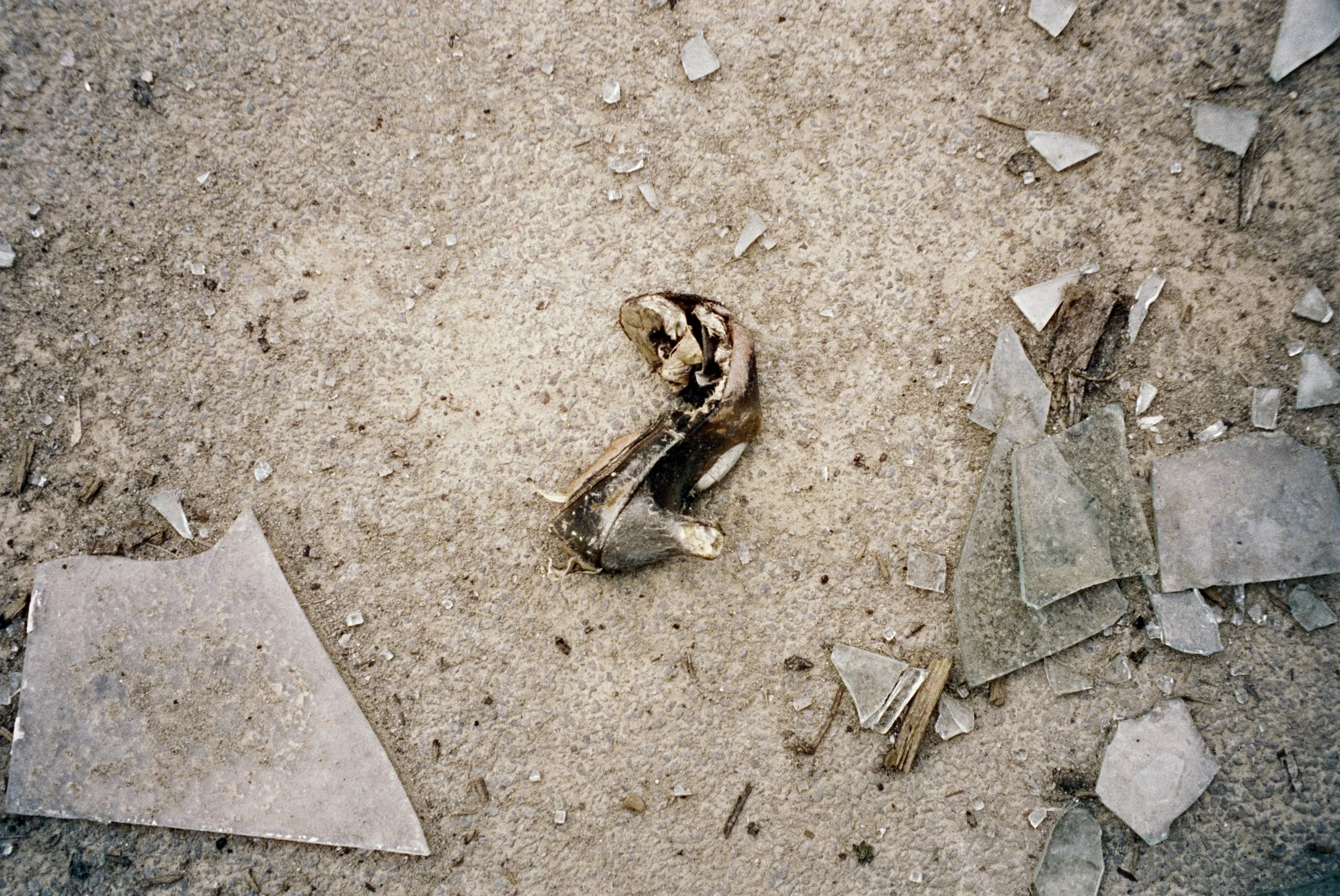
Images taken in NYC, 2026
Invite a vampire into your home and he will stay, yet revoke his invitation and he is compelled to leave. In 1486, Henrick Kremer wrote the Malleus Maleficarium, loosely translating to this machine kills witches. He argued witches are a test of faith, yet after having no fame during its original publishing, almost 90 years after his death, the Malleus re-emerged to justify the witch hunts of the late 16th and 17th centuries. As Margaret Atwood famously described the Salem witch trials as “one of the foundation events of American history”, she suggests the significance of the trials extends beyond the familiar image of women accused of making pacts with the devil. Fractals are patterns in nature which repeat itself, growing outwards like veins connecting back to the heart. When we picture a witch, a white woman more often than not comes to mind, thanks in part to popular culture's romanticisation of European witchcraft. Yet the history of witch persecution is considerably more complicated. The Salem Witch trials were during a period of disease, environmental disasters, and war: as Mary Beth Norton explores in In The Devil’s Snare, fear of Indigenous attacks and the violence of colonisation formed part of the psychological landscape in which accusations developed. Tituba, an enslaved woman, became one of the first people accused of witchcraft. Historians have since described the witch trials as a failed experiment, implying those responsible had other items on their agenda.
With the Enlightenment of the Renaissance, comes the expectation of understanding, but the biggest body counts from the witch hunts were between 1560 and 1640. Anxiety spread when Christianity began to lose its grip: Protestants and Catholics fought each other, described by historians as a “spiritual arms race”. The Church urged its followers to look for the enemies within, “cleaning up society to please God” as put by historian Ronald Hutton. Perhaps our own renaissance is not so different. Earlier this year, I came across the YouTube channel Medieval Mindset which proposed that the 2020s could be the closest we have come to medieval conditions, anticipating a technological renaissance in the 2030s. Maybe it’s the simple visual cues of the medieval period that make us feel a hunger pang for simpler times, but a renaissance doesn’t always mean prosperity for everyone. Our current movement from meritocracy towards technocracy raises questions about who gets to define expertise and who gets to benefit from technological progress. Elon Musk's presentation of an AI future oscillating between heavenly utopia and existential hell, perhaps our own spiritual arms race. Billionaires tell us our jobs will disappear, entire industries will be transformed, meanwhile, the search for someone to blame continues. In the United States, anti-immigration rhetoric and raids persist; in the UK, increasingly expansive facial-recognition surveillance raises questions about who is watched, and who is protected, mobs continue to attack immigrants, and increased legislation against the trans community solidifies the narrative. The witch hunt begins when a structural problem is repackaged as the fault of an individual or a group.
Recently, a book titled ‘Witches’ was published by Harley Weir and Dilara Findilogku, documenting Romanian witches, highlighting the reclamation of ancient practices by surviving generations. The eradication of healers, village elders and local rituals often meant the removal of knowledge and female agency, as much like stories, these practices are passed down through families. The pointed hat may have become a Halloween costume, but accusations of witchcraft can still carry devastating consequences. The Pendle Hill trials of 1612 offers a well documented example of storytelling and the exchange of local knowledge used against community members when suspicion is encouraged, creating a bottom up issue, turning against each other to remove those seen as ‘other’. The 2020 remake of The Witches attracted criticism for depicting the Grand High Witch with hands resembling limb differences associated with ectrodactyly, demonstrating how easily the figure of the witch can continue to reinforce ideas of otherness.
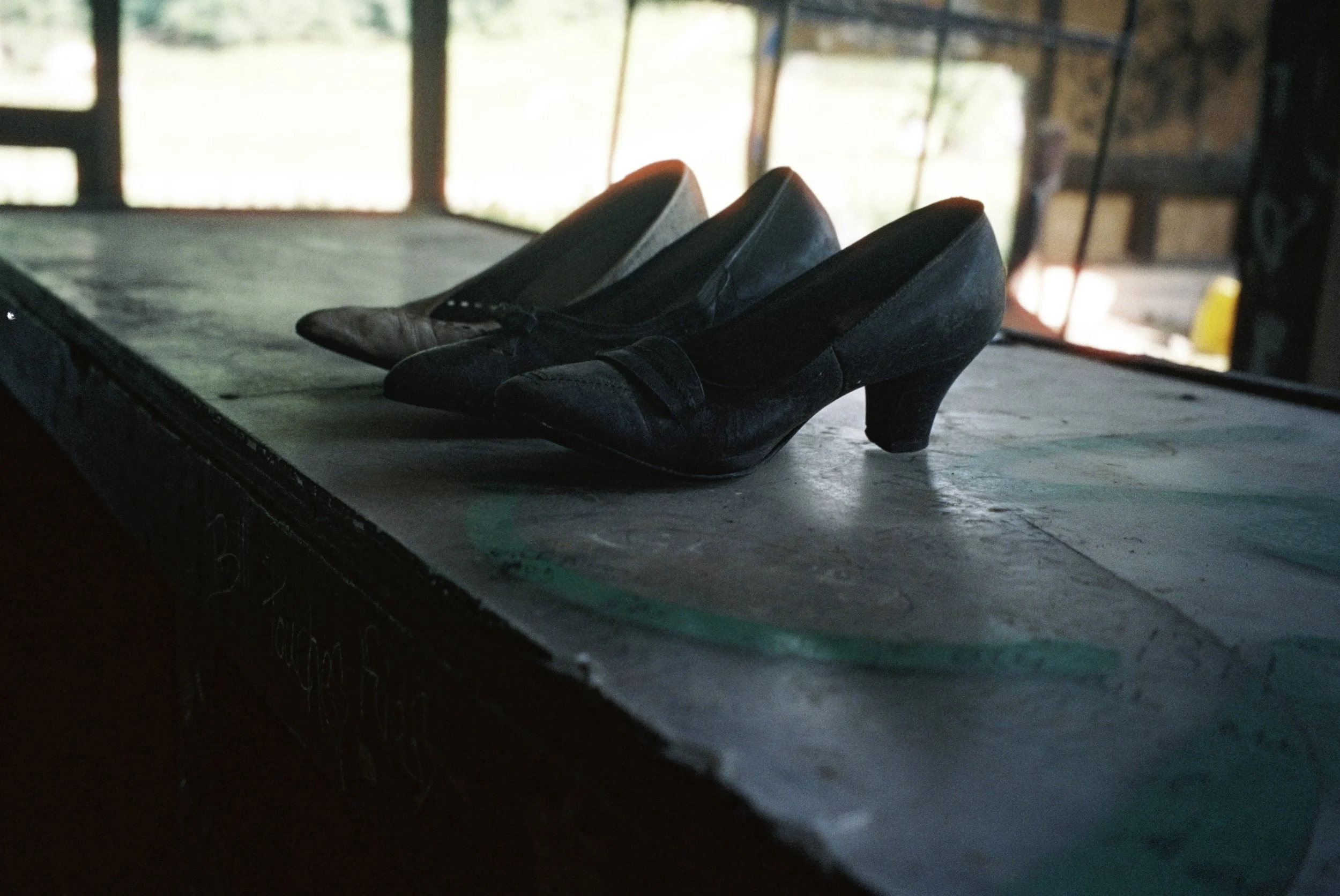
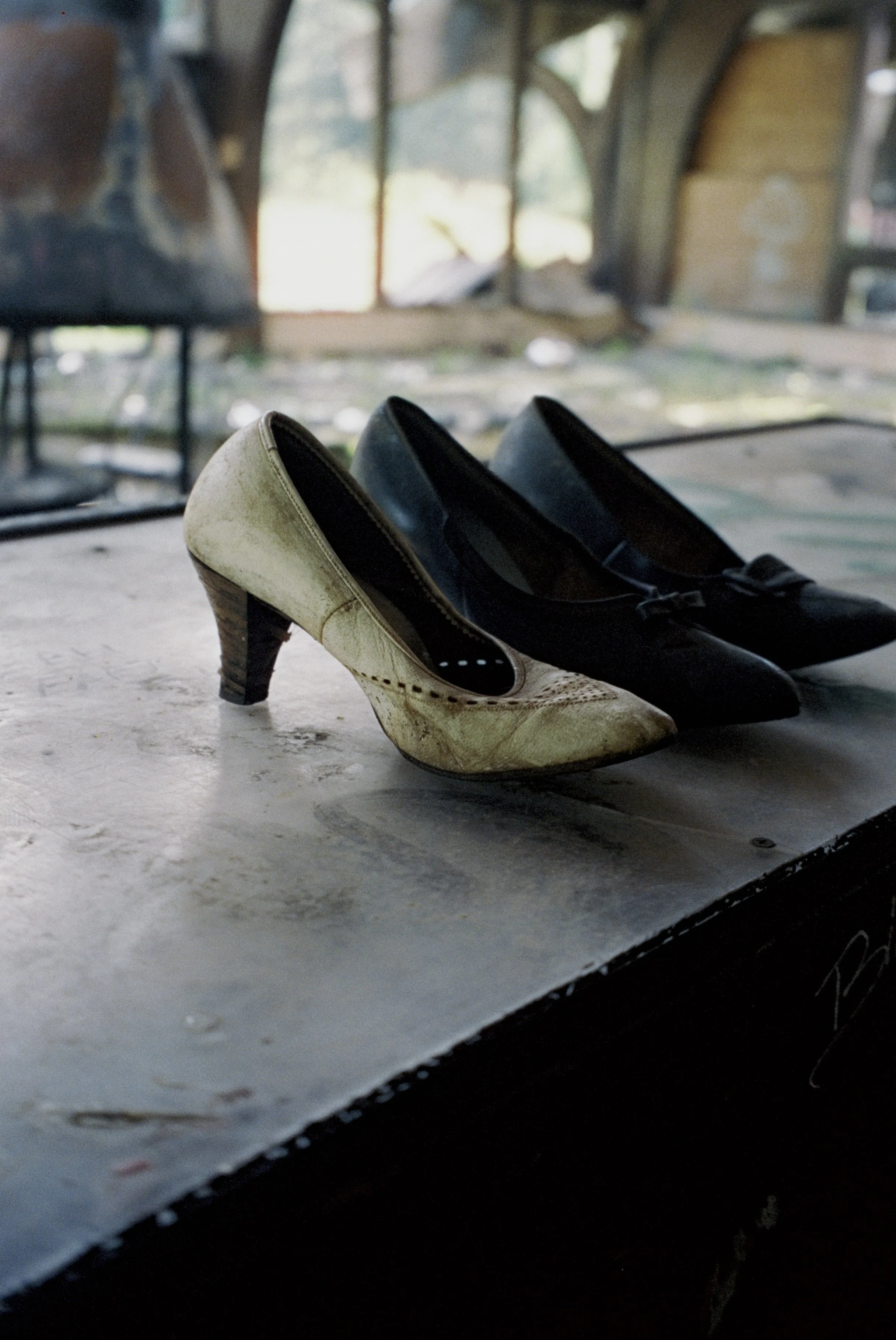
Images taken in NYC, 2026
When the wars of religion began in the 1500s, confessionalization emerged as competing religions attempted to consolidate authority through social discipline, making the private body into a public concern. Sexuality, relationships, and personal conduct could all become evidence of religious allegiance or moral failure. In The Devils, Sister Jeanne's body of frustrated desire is transformed into simultaneously something to discipline, exhibit and use as evidence. Ruth Miller in The Erotics of Corruption: Law, Scandal, and Political Perversion states, “the line between the abstract, rational and noncorrupt and the fleshy, irrational, and corrupt is not an obvious one”, similarly to how Catherine Liu explores the fetishisation of confession and vulnerability seen today through trauma as content (e.g. celebrity + trauma = personal branding via Oprah), which often eclipses the exploitation of the working class. As wars and genocide happen around the world, this news distracts, and trauma script culture is the veil. We are encouraged to confess in order to be seen, but visibility does not necessarily mean liberation.
As confession evolved from the Witch Panics of the 1600s into an era of feeling seen, we look for it in mirrors instead of shared commonalities with others. In 2019, Mark Leckey’s O’Magical Power of Bleakness was shown at the Tate Britain, exploring the relationship between technology, magic and politics: the idea that music, and magic are inherently intertwined as a form of resilience, imagining another way of being. So, whilst re-enchantment may not need to be retreating into nostalgia or buying into the latest fashionable version of the occult, it can be an attempt to recover forms of connection, knowledge and imagination that dominant systems have made difficult to sustain. Whilst popular culture cycles through its latest fascination with magic, the alternative is increasingly absorbed into the mainstream, which brings us back to The Devils. The temptation is to celebrate its obscenity, as one of cinema's great forbidden works, but to do so without examining its politics is to miss the point. Russell's film is not shocking because it depicts religious hysteria, sexual repression and violence, but because it shows how easily these things can be made to look like morality, what we might now call hypernormalisation. The witch trials, and our contemporary appetite for scapegoats are not interchangeable histories, but they share a recurring question: who benefits when fear becomes a public spectacle, and who is made to pay for it? If our modern renaissance is not the return of magic, but the return of the conditions that made people desperate for it in the first place, then I can’t wait for us to change out of this costume.